


27w Demister
Pro Line 27 Watt Bathroom Mirror Demister | 290 x 290mm Diameter | PO101164-00
$171.60
$156.00 ex. GST
Search Results:
Search Results:
Find the best bathroom mirror demisters here at Sparky Direct [ Read More ]
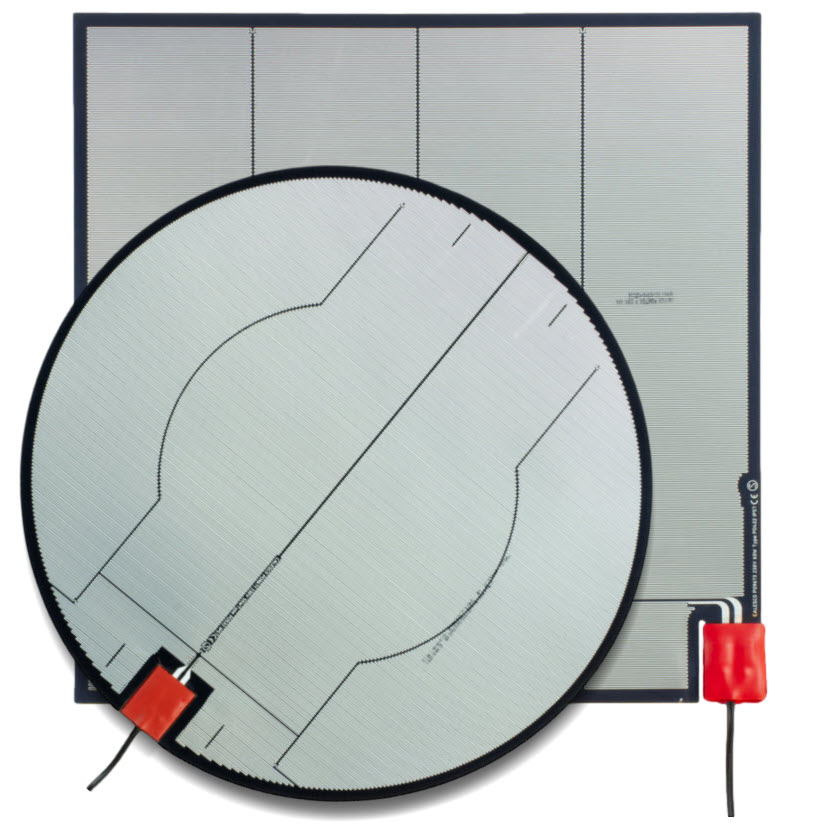
A mirror demister is a thin, flat heating pad that sits flush against the back of a bathroom mirror. The pad is made of a conductive heating element laminated between insulating layers, and it draws a small amount of mains power when energised. Most demisters run between 20 and 250 watts, depending on the mirror size. The pad is thin enough to fit behind a wall-mounted mirror without creating a visible bulge.
Mirrors fog when warm, humid air meets a cold surface. The glass drops below the dew point of the surrounding air, water vapour condenses into fine droplets, and the mirror looks fogged. A cold mirror in a hot, steamy bathroom condenses water almost instantly after a shower. The same physics applies to car windscreens and spectacles.
A demister works by keeping the mirror glass a few degrees warmer than the surrounding air. Once the glass is above the dew point, water vapour cannot condense on it. The element does not need to get hot to the touch: a surface temperature of around 32 to 40 degrees Celsius is enough to prevent fogging in a typical Australian bathroom. The demister should be switched on five to ten minutes before the shower to pre-warm the mirror.
Adhesive pads are self-adhesive heating mats designed to fit existing mirrors. The installer peels off the backing, sticks the pad to the rear of the mirror, and connects the two flying leads to the bathroom light circuit. Adhesive pads suit renovation work and DIY upgrades where replacing the whole mirror is not practical. Coverage sizes range from small 274 x 274mm pads for vanity mirrors to 524 x 1032mm pads for full-height wardrobe-style mirrors.
Many modern bathroom mirrors and shaving cabinets ship with a demister pre-installed. The heating element is bonded to the mirror at the factory, and the mirror arrives on site with a single flying lead ready for connection. Integrated units suit new builds and full bathroom renovations. They avoid the adhesive step and deliver even heat coverage because the factory-applied element is laminated directly to the glass.
Wired demisters (factory-installed in a mirror or cabinet) are the neater option where the mirror is being chosen at the same time as the bathroom layout. Self-adhesive pads are the practical choice for retrofitting existing mirrors without replacing the glass. Both types use the same wiring approach once installed: a permanent 240V connection made by a licensed electrician.
The demister pad should cover roughly 60 to 80 percent of the mirror surface. Covering too little leaves foggy borders around the heated area; covering too much wastes energy and can interfere with frame fittings. Manufacturers publish a size chart that matches pad dimensions to common mirror sizes, and the pad should always sit at least 25mm inside the mirror edge to avoid heat stress on the edge seals.
The pad clears the area it directly heats, plus a small margin around the edge. The clear zone is what the user needs: the area where they actually stand and look. Aligning the pad with the expected face height is more important than maximising total coverage. A vanity mirror needs the heat concentrated at eye level rather than near the bottom.
Higher-wattage pads clear faster but use more power. A 40W pad on a 600 x 400mm mirror takes about 8 to 12 minutes to reach a steady-state clear temperature from cold. A 100W pad on the same mirror clears in about 4 to 6 minutes. For most bathrooms, a pad rated 8 to 12 watts per 100 square centimetres of mirror surface gives a good balance of speed and running cost.
For a standard vanity mirror of 600 x 800mm, look for a pad in the 274 x 524mm or 524 x 524mm range rated between 60 and 80 watts. For a larger shower-room mirror of 900 x 1200mm, step up to a 524 x 1032mm pad rated 140 to 200 watts.
The main benefit is immediate: the mirror stays clear through and after the shower. Shaving, applying makeup, and grooming can happen without wiping the glass or waiting for it to clear. For households where showers run back to back, this eliminates the wiping cloth and the water streaks it leaves behind.
Demisters support the high-finish look that Australian bathroom renovations now aim for. A fogged mirror undermines the impression of a premium space, especially in hotels, short-term rental properties, and display homes. A clear mirror reads as a well-designed, well-specified bathroom.
In homes where several people share a bathroom, demisters remove a daily friction point. The first person out of the shower leaves a fogged mirror for the next; a demister keeps the mirror clear regardless of order. The same benefit applies to family bathrooms, ensuites feeding a busy main bedroom, and bathrooms in shared housing.
Small en-suites with low shower frequency can use a basic low-wattage pad on a simple switch. Main bathrooms with heavy use benefit from a higher-wattage pad on a timed circuit. Commercial and hospitality bathrooms typically specify the largest integrated unit the mirror supports, paired with occupancy-based control.
A well-ventilated bathroom with a working exhaust fan gives the demister less work to do. If humidity drops quickly after the shower, even a modest pad keeps the mirror clear. Poorly ventilated bathrooms hold humidity for longer and benefit from higher-wattage pads. See Sparky Direct's range of bathroom exhaust fans if ventilation needs upgrading.
There are two common control approaches. The first wires the demister to the bathroom light switch so the pad runs whenever the light is on. The second uses a dedicated switch or timer so the demister can run independently. Independent control is more efficient because the pad only runs when someone actually intends to use the mirror. Dedicated timer control can be added using an inline digital timer.
Bathroom wiring in Australia is governed by AS/NZS 3000:2018 (the Wiring Rules). Bathrooms are defined as wet areas with specific zone classifications around the shower and bath. Mirror demisters are 240V mains-powered appliances and must be installed by a licensed electrician. The circuit must be protected by a safety switch (RCD) with a 30mA trip threshold.
The pad is fixed to the back of the mirror with the self-adhesive side, centred on the expected viewing area. The flying leads exit the top or side of the pad and route through a wall cavity to a concealed junction point. The mirror is then mounted with the pad pressed firmly against the wall so there is no air gap behind the heating element.
New builds are easier. The electrician runs the demister cable into the wall before the mirror goes up. The mirror then ships with the pad pre-bonded, or gets the adhesive pad fitted during installation. Retrofits need more care. The existing mirror usually needs to come off the wall, the adhesive pad is fitted, new cabling is chased into the wall, and the mirror is remounted. A retrofit often triggers a review of the full bathroom circuit, including the light switches that may control the demister.
Licensed Work Only: Mirror demister installation in Australia is 240V mains work and must be carried out by a licensed electrician. DIY installation is illegal in all Australian states and territories and will invalidate insurance in the event of an incident.
A typical 80W demister run for 30 minutes draws about 0.04 kWh. At a residential tariff of around 32c per kWh, that costs roughly 1.3 cents per use. Run twice a day, year-round, that is around $10 a year. A 200W commercial pad on the same schedule costs about $25 a year. These numbers are negligible compared with heated towel rails or underfloor heating.
The running cost of a demister is one of the lowest in a bathroom. The convenience benefit is substantial: no fogged mirror, no waiting, no wiping. For most households, the cost-per-use is well under the price of a coffee per month of daily use.
Efficiency improves when the demister is controlled by a timer or switched independently from the bathroom light. A pad that runs only for the five minutes around the shower uses a fraction of the energy of one that runs whenever the light is on. For light-linked installations, fitting a timer relay to the demister circuit is an easy efficiency upgrade.
Demister pads and factory-heated mirrors deliver the same result. The difference is the unit of purchase. A heated mirror is bought as a complete product; a demister pad is bought as an accessory to be added to a separately sourced mirror. Heated mirrors typically cost more as a line item but save install time. Pads cost less but require fitting to the mirror on site.
Budget pads use basic resistive heating films and pressure-sensitive adhesive. They work reliably for residential use but may have shorter service lives in humid environments. Premium pads use medical-grade laminated elements, double-insulated leads, and higher-grade adhesives that survive bathroom heat and humidity better over time.
Reputable brands in the Australian market include Wilson Elements for demister pads, and Thermogroup for bathroom heating products generally. Brand quality matters more for the adhesive and lead insulation than for the heating element itself, because those are the components that tend to fail first in wet-area service.
| Feature | Adhesive Demister Pad | Factory-Heated Mirror |
|---|---|---|
| Typical Cost | Lower (pad only) | Higher (complete mirror) |
| Install Time | Longer (pad fitting required) | Shorter (pre-bonded) |
| Mirror Choice | Any compatible mirror | Limited to heated mirror range |
| Suits Retrofit | Yes | Only with full mirror replacement |
| Heat Distribution | Good (if pad centred well) | Excellent (factory aligned) |
Demisters and heated mirrors are stocked by online electrical wholesalers, bathroom supply specialists, and some general hardware retailers. An electrical wholesaler is the best fit for trade buyers: the product is held as stock, pricing reflects trade volumes, and the supply chain is set up for licensed electricians doing installation work. The Sparky Direct bathroom mirror demister range covers retrofit pads and factory-heated options.
Cheap demister pads (imported, unbranded, sold through generic online stores) may not carry Australian electrical approvals. Without RCM (Regulatory Compliance Mark) certification, the product is not legal to install by a licensed electrician in Australia. Trade-grade pads from established brands carry the RCM mark and come with proper installation instructions in English. The price gap between unbranded and trade-grade is small relative to the cost of the electrician's install.
Check the pad size matches the mirror, the wattage suits the bathroom, the product carries Australian electrical approvals, and the supplier has stock on hand. Delivery delays on demister pads commonly hold up bathroom renovations because the mirror cannot be mounted until the pad is fitted. Buying from a supplier that holds stock locally avoids that hold-up.
A mirror with a demister fitted is cleaned the same way as any bathroom mirror: glass cleaner on the front, soft cloth, no abrasives. The back of the mirror should never be exposed to water, because the pad and its leads are on the back. If the mirror comes off the wall for any reason, inspect the pad and leads for signs of damage before remounting.
Quality demister pads are designed for bathroom service. The main failure modes are adhesive breakdown (pad starts to lift from the back of the mirror) and lead insulation degradation (leads become brittle or cracked). Both failures are age-related and more common in hot, humid climates such as Queensland and the Northern Territory. Service life for a good-quality pad is typically 10 to 15 years.
Replace the pad if it has stopped heating, if the adhesive has failed and the pad is lifting, or if the leads are showing visible damage. Upgrade the pad if the original was undersized, or if household usage has changed (more people, more showers). Replacement is also sensible when the mirror itself is being swapped out and the old pad has reached end of life anyway.
If the pad is not warming up, the first check is power: is the circuit live, is the switch on, is the RCD holding. If power is confirmed, the pad itself may have failed (open-circuit heating element), or one of the flying leads may have broken inside the wall cavity. A licensed electrician can test continuity across the pad's terminals to confirm.
If the middle of the mirror clears but the edges stay fogged, the pad is likely undersized for the mirror. This is a design issue rather than a fault: the pad was matched to a smaller mirror than it is now fitted behind. The options are to live with the fog edge, fit a larger pad, or fit a second pad alongside the first to extend coverage.
If the pad has lifted from the back of the mirror in one or more places, the adhesive has failed. Do not attempt to re-stick with general-purpose glue: the heat from the pad will degrade most adhesives quickly. The correct fix is to remove the old pad, clean the back of the mirror, and fit a new pad with factory-grade adhesive. If this is the second pad to fail in the same installation, check for excessive heat buildup behind the mirror. That points to inadequate air circulation or a mismatch between pad wattage and mirror size.
Demisters make the clearest sense in ensuites, main bathrooms with showers, hotel rooms, short-term rental properties, and display homes. Anywhere a clear mirror is needed immediately after a shower is a good candidate. They are also worthwhile in bathrooms with poor ventilation, because the alternative (waiting for the fog to clear naturally) can take 10 to 20 minutes.
Powder rooms and separate toilets without a shower have no fogging problem to solve, so a demister adds no benefit. Bathrooms with large windows and strong natural ventilation may clear so quickly that a demister is redundant. Infrequently used guest bathrooms are also borderline candidates.
The cost of a good-quality residential demister, installed, is typically a small fraction of a full bathroom renovation budget. The running cost is negligible. Against that, the convenience benefit is daily and compounds over the 15-year service life of the product. For most owner-occupier bathroom renovations, the answer is yes. For rental properties and hospitality, the answer is almost always yes.
Watch Mercator PBM003 | Romu 600mm Diameter Round LED Mirror | 1100lm 16W video
Watch Thermogroup 5289 | Thermorail Eco Timer For Heated Towel Rails video
Watch IXL12309 | Tastic Prime 3 in 1 Bathroom Heater, Exhaust Fan & Light video

Sparkies spend alot of time everyday ensuring downlights are evenly spaced in a room for correct beam dispersal and aesthetic. So why do they often overlook the bathroom? These lights bring a premium feel to any bathroom as everything isn't crammed into a large piece of plastic hanging off the ceiling. Used in conjunction with a seperate fan be that an in line one plumbed to a grille or a more typical pass through. The assembly of the light fitting is robust and what you would expect. Being a larger diameter and depth than a standard downlight check your clearances before committing to cutting the hole.
I second Dr Watts! No bloated bland bezel bulging from the ceiling, just a more elegant fixture. Great for heating separate areas of a large bathroom more efficiently (e.g. above sink, above shower). Most bathroom shall use more than one for faster heating, but a single lamp can be used for keeping the loo warm. Another advantage is the lamps can be more flexibly controlled, such as by having separate switches, and using a smart thermostat with multi-stage heating for automation and energy-saving. I used a Google Nest thermostat with a relay box I built.
I had an older model which lasted 12 years, still works , but the fan would make banging noises while on and sometimes not even work. So I decided to get a new one and didn’t want to cut a bigger hole or patch the existing hole for a different size fan. Went online and straight away found same looking fan with updated model on sparky direct website. Purchased and few days later delivered, that’s how I like it. Got my sparky mate to install it and works a treat. Good stuff.
Quality products in stock • Fast Australia-wide delivery • Competitive trade pricing
Browse Bathroom Mirror Demisters → Get Expert Advice →No, they operate silently and are hidden behind the mirror.
Sparky Direct supplies bathroom mirror demisters with fast Australian delivery to support clear, fog-free bathroom mirrors.
Yes, hard-wired mirror demisters must be installed by a licensed electrician in accordance with Australian regulations.
Warranty coverage varies by manufacturer and typically applies to manufacturing defects.
Consider mirror size, power requirements, installation method, and bathroom layout.
Yes, mirror demisters are available in various sizes to suit different mirror dimensions.
By keeping mirrors clear, they can improve comfort and usability during daily routines.
Yes, they are commonly installed in ensuites for added convenience.
They are designed for intermittent use and are usually operated only when needed.
Mirror demisters generally require no ongoing maintenance once installed.
Yes, they are commonly used in small bathrooms where steam buildup is more noticeable.
No, demisters are installed behind the mirror and do not change its appearance.
Yes, they can often be added during bathroom upgrades or renovations, subject to access and wiring.
A bathroom mirror demister is a low-wattage heating element designed to prevent mirrors from fogging during and after showers.
Most demisters begin clearing the mirror within a few minutes of being switched on.
Yes, they are designed to keep the mirror clear even during hot showers.
Some systems operate with the bathroom light or switch, while others may include timers depending on installation.
Yes, many mirror demisters are suitable for use with LED bathroom mirrors, subject to compatibility.
Some mirror demisters are hard-wired, while others may be designed for plug-in installation, depending on the model.
Mirror demisters are low power devices and typically use minimal electricity during operation.
Mirror demisters designed for bathrooms meet appropriate safety requirements for use in humid and wet environments.
Many demisters are compatible with standard bathroom mirrors, but size and mounting suitability should be checked.
Yes, when correctly installed and used as intended, mirror demisters are designed for safe operation in bathroom environments.
Yes, mirror demisters supplied in Australia should comply with relevant AS/NZS electrical safety standards for bathroom use.
Mirror demisters gently warm the surface of the mirror, reducing condensation caused by steam and humidity.


