Search Results:
Search Results:
Search Results:
Search Results:

Find the best Air Conditioner Maintenance Supplies here at Sparky Direct. [ Read More ]
Air conditioning maintenance is the routine work that keeps heat-exchange surfaces clean, drain paths clear, refrigerant lines insulated, and electrical components within spec. The supplies that support this work are consumables and small parts, not capital equipment. They sit between the installer's toolkit and the replacement unit itself.
A split system loses efficiency every year it runs without a clean. Dust blankets the evaporator fins, biofilm grows in the drain tray, and pipe insulation degrades under UV exposure. Each of these problems has a specific supply that fixes it: coil cleaner, drain treatment, and UV-stable pipe lagging. Skipping any of the three raises running cost and shortens unit life.
A dirty coil can add 20 to 30 percent to running costs. A blocked condensate drain causes ceiling damage that costs thousands. A cracked capacitor trips the breaker on the hottest day of the year. The maintenance supplies that prevent these failures cost a fraction of the repair bill, and a licensed technician can stock a kit for well under two hundred dollars.
Residential split systems typically need one full service per year, usually scheduled before summer load kicks in. Commercial ducted plant and cassette units run harder, collect more dust and grease, and require quarterly inspection to keep pace with wear. The supply ranges overlap, but commercial work leans heavier on bulk cleaner concentrates, larger-capacity condensate pumps, and higher-grade filtration media rated for return-air systems. Sparky Direct stocks both scales, so residential and commercial technicians can source from the same account.
Maintenance supplies split into five working groups. Each addresses a specific failure mode, and each has products sized for both residential service and commercial plant.
These five groups cover the full service workflow, from filter change to electrical diagnosis. Products within each group are stocked under the Air Conditioning Tools and Maintenance Supplies categories.
Filters are the first line of defence. A clogged filter restricts airflow, forces the compressor to work harder, and lets dust reach the evaporator coil where it is much harder to remove. Most Australian split systems use a washable plastic mesh filter behind the front cover. These need rinsing every four to eight weeks in normal use.
Reusable mesh filters handle coarse dust and last the life of the unit if handled carefully. Disposable pleated filters trap finer particles and suit ducted systems with return-air grilles. The choice depends on system type: split systems almost always use the reusable style supplied with the unit, while ducted systems often run a disposable panel filter in the return.
Filter grades run from G3 (coarse dust) through M5 and F7 (fine particles) to HEPA (H13 and above). A standard home system runs a G3 or G4 filter. Homes with allergy sufferers or commercial premises with indoor air quality obligations step up to F7 or higher. Higher grades catch more, but also restrict airflow, so the system design must suit the filter class.
Residential: clean every four to eight weeks during heavy use, monthly during peak summer. Commercial: inspect monthly, replace disposables quarterly at minimum. If the filter is visibly grey when held up to light, it needs attention. If it tears, flexes, or shows mould staining, replace rather than clean.
Running the system without the filter fitted pulls dust straight onto the evaporator coil, and one season of this creates a cleaning job that takes hours and often requires coil chemistry. Always refit the filter before restarting the unit, even for a short test run.
Coils are where the refrigerant does its job. The evaporator (indoor) coil absorbs heat, the condenser (outdoor) coil rejects it, and both rely on clean fin surfaces for thermal transfer. Dust, pollen, mould, salt, and cooking residue all reduce this transfer. Coil cleaning is the highest-value single task in any annual service.
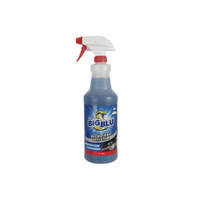
Evaporator cleaners are foaming alkaline formulations that lift biofilm, nicotine, and organic residue from indoor fin stacks. Products like the Viper RT320V concentrate deliver professional-grade cleaning in a bottle that fits a standard pump sprayer. Rinse-free formulations drain to the condensate pan, meaning no dismantling is required for most residential services.
Outdoor coils collect a different set of contaminants: road dust, lawn clippings, cottonwood fluff, and in coastal areas, salt. Condenser cleaners are typically heavier-duty than evaporator formulas and often need rinsing with water. Spray from the inside out where possible, so contamination is pushed away from the fin face rather than deeper into the stack.
Humid Australian summers are ideal for mould growth inside indoor units. Antimicrobial treatments applied after coil cleaning suppress regrowth for several months. They matter most in bedrooms, childcare, and aged-care settings where air quality complaints often trace back to mould in the fan blade and drip tray.
Fins are thin aluminium, and they bend easily. A dropped spanner, a pressure-washer nozzle, or a careless ladder can flatten a section of fins and reduce airflow locally. Fin combs straighten bent fins and restore airflow without replacing the coil. A pocket-sized fin comb is cheap insurance.
The condensate system carries water stripped from the air by the evaporator coil. A blocked drain is the single most common call-back for residential split systems, and the water damage it causes is expensive to repair. Preventative treatment is simple, cheap, and takes minutes.
Tablet treatments drop into the condensate pan and dissolve slowly over time, killing the algae and slime that build up in warm and wet conditions. Liquid enzyme treatments flush existing blockages that have already taken hold inside the drain line. The simple rule of thumb: fit a tablet every service to prevent buildup, and reach for an enzyme flush to clear a diagnosed blockage.
Where gravity drainage is not possible, a condensate pump lifts water to the nearest drain point. Brands like Sauermann produce compact under-unit pumps with built-in overflow safety switches that shut the compressor down before water spills. The SI30 and OMEGAPACK models fit most split systems sold in Australia.
A simple wet-dry vacuum and a length of flexible hose clears most residential blockages. Commercial work calls for purpose-built drain pumps with reservoir attachments. The key is catching the blockage before it overflows: a ten-minute drain flush during annual service avoids a ceiling repair bill.
Safety switches in the drain pan are mandatory under AS/NZS 3500 for some installations and strongly recommended for all. They cut power to the indoor unit the moment water rises above a set point, stopping production at the source. Pair every residential split install with a drain safety switch, and the call-backs drop to near zero.
Refrigerant lines must stay insulated to prevent condensation, energy loss, and UV degradation. In Australia, where outdoor units sit in full sun for months at a time, the UV resistance of the insulation material is often the limiting factor on system life.
Closed-cell nitrile foam is the standard insulation for refrigerant lines. It resists moisture, handles the temperature differential between suction and liquid lines, and keeps condensation off the pipe surface. Brands like K-FLEX and Inoac supply sleeved foam sized for common refrigerant pipe dimensions.
Even the best nitrile foam needs protection from UV if the pipe run is exposed. Self-adhesive pipe lagging tape from NITTO wraps the insulation and blocks sunlight. Tape is also useful for tidying joints and sealing the ends of foam sleeves where they meet the wall penetration.
Thickness matters more in humid coastal zones than in dry inland areas. A 13mm sleeve is the Australian baseline for residential work, and 19mm is typical for commercial plant or long pipe runs. Under-insulated pipes drip condensate onto ceilings and walls, which is a very visible service fault.
Common Insulation Failures: UV degradation is the main enemy. Unprotected black foam cracks and crumbles within two to three summers of direct sun. Always lag exposed pipe runs, and check any existing install for brittle or missing insulation before signing off.
AC systems are electrical machines first and refrigerant machines second. Most fault calls start with an electrical symptom, and the supplies that diagnose and fix those faults are part of the maintenance kit.
Run capacitors and contactors fail with age, heat exposure, and the number of starts per hour a system sees over its working life. A bulging capacitor is, for practical purposes, a failed capacitor waiting to trip the breaker at peak load. A pitted contactor drops voltage under load and produces the intermittent starting faults that account for many summer call-backs. Both are cheap to replace if caught during a routine service. Stock a small range of common ratings for residential work, and keep a supplier account ready for the larger commercial sizes.
A digital multimeter with capacitance range is the single most useful diagnostic tool on an AC service. Brands like Fluke and Klein Tools supply HVAC-specific clamp meters with temperature probes for in-situ diagnostics. Refrigerant gauges are ARCtick-regulated territory and require a current licence to use.
Live diagnostics mean live risk, and the PPE stocked in the van needs to reflect that reality. Rated insulated gloves, Cat III voltage probes, and a tested insulation tester belong in every AC tech's kit alongside a current test-tag record. Cheap meters and unrated gloves are a false economy on equipment this expensive, and the consequences of a fault reach well beyond the cost of the tools themselves.
Any work that involves handling refrigerant requires a current ARCtick licence. This covers recovery, charging, and decommissioning. Cleaning, filter changes, drain maintenance, electrical diagnosis, and insulation replacement do not need ARCtick, and form most of a routine service. Keep the two workflows clearly separated in job notes and invoicing.
The supplies on a van should reflect the mix of work done. A residential service technician needs different stock from a commercial plant maintainer, even though both work on air conditioning.
Split systems: focus on indoor coil cleaner, drain treatment, filter wash, and outdoor coil rinse. Ducted systems: add return-air filters, larger condensate capacity, and access-panel hardware. Cassette units in commercial fit-out work: prioritise ceiling-safe cleaning hoods and drop-sheet protection.
Residential work uses small bottles, single-use tablets, and a compact voltage tester. Commercial work runs through concentrate drums, bulk tablets, and heavier test kit. Buying commercial sizes for residential work wastes shelf life; buying residential sizes for commercial work wastes time on restocking.
Typical residential split: one full service per year. Typical commercial ducted: quarterly inspection, annual deep clean. Stock to cover the peak summer month at full capacity, then reorder in February. Running out of evaporator cleaner in January loses jobs to competitors who planned ahead.
A solid starter kit covers one litre of concentrated evaporator cleaner, one litre of condenser cleaner, and a box of drain tablets for routine prevention work. Round it out with an enzyme bottle for diagnosed blockages, a roll of pipe lagging tape, a fin comb, a pump sprayer, and a cleaning hood. Add a condensate pump test fitting, a capacitance-capable multimeter, and insulated gloves to cover the electrical and diagnostic side of the work. That list handles roughly 90 percent of residential call-outs without a second trip to the van.
AC maintenance supplies are low-margin consumables, and price differences between suppliers are real. Buying well lowers the per-job cost of service and improves margin on fixed-price maintenance contracts.
Typical 2026 Australian trade pricing sits in predictable bands across the main consumable lines. Evaporator cleaner concentrate runs around $40 to $60 per litre, and condenser cleaner runs around $45 to $70 per litre. Drain tablets cost around $1 to $2 each in bulk boxes, while closed-cell pipe insulation sits at around $4 to $8 per metre depending on bore size. Bulk and trade pricing shaves 15 to 30 percent off the retail equivalents on these items.
Pre-assembled kits suit new starters and occasional users. Experienced trades buy individual products and refill as they go, because the kit inevitably contains one item they never use. Installation kits suit new install work; maintenance work favours the à la carte approach.
Concentrate formulations are cheaper per litre of diluted product, save shelf space, and cut shipping weight. For any tech doing more than one service a week, concentrate is the right format. Keep one ready-to-use bottle for quick jobs and the concentrate for heavy service days.
Hardware retail stocks consumer-grade filters and basic cleaners. Trade suppliers carry the professional concentrates, the vacuum pumps, the vacuum pump oils, and the brand ranges serious techs specify. Sparky Direct sits in the trade bracket with pricing structured for licensed electricians and AC technicians.
Australia-wide next-business-day delivery from Sparky Direct covers most metro and regional areas. For techs in Darwin, Cairns, Perth, or remote sites, stocking a week's supply on the van is sensible, as freight timelines lengthen outside the major corridors.
Choosing the right supplies is part product knowledge, part seasonal planning. Australian climate zones vary enough that a blanket approach fails in either the tropics or the cold inland.
Coastal techs deal with salt corrosion on outdoor coils and need heavier condenser cleaner. Tropical techs deal with biological growth and lean on antimicrobial treatments. Inland techs deal with dust loads and spend more time on filter work. Stock the supplies the local climate actually demands.
The four most common mistakes on a restocking run are all avoidable with a few minutes of planning. Buying ready-to-use bottles when concentrate is 60 percent cheaper per dilution wastes budget on shipping water. Forgetting pipe lagging tape is a classic, usually discovered halfway through an outdoor pipe run with the customer watching. Stocking only one capacitor size guarantees the next call-out needs the one that was skipped. Skipping the cleaning hood because it feels optional then means spending an hour mopping water off floors and walls. A quick stock review before each shift prevents all four.
Australian AC service peaks in the six weeks before Christmas, when households and small businesses prepare for the summer heat. Stock up heavily in October so the van is ready before the first hot spell hits. A secondary peak runs from late February to March, when systems that struggled through summer finally fail under sustained load. Keep filter stock, drain tablets, and common capacitor sizes elevated through both peaks to avoid losing jobs to competitors with better-prepared vans.
Sparky Direct ships the complete range of maintenance supplies Australia-wide, and the trade account system gives licensed electricians and AC technicians structured pricing across every category on the site. The Pair Coil Copper and Split System Airconditioners ranges support the install side of the business, while the consumables page carries everything required for scheduled service work.
Watch NYLOG BLUE RT201B | Gasket & Thread Sealant 30ml video
Watch Viper RT320V | Max Strength Evaporator Cleaner | 1064ml video
Watch Sauermann SI30 | Mini Air Conditioning Condensate Pump 20L/H video

Well made, nice and light. Easy to set up and clean, nice length of drip-hose (perfectly fits standard 15L water bottles), lots of adjustments to suit a number of inside units' sizes. Shipping came surprisingly fast, overall a good product. Also comes with clear plastic storage back
It cleans AC evaporators very effectively. Made a few units go from barely running to working extremely well. Its a very concetrated formula, so it saves on space and cost vs the 1 gallon ready to use packet. Just put in a sprayer bottle and off you go.
I just used this, but I can review due to previous experience. Lubes parts together then seals and sticks like 'gorilla snot'.(that is stereotyping). Can be undone if need be, not like a tight locking product of another brand
Quality products in stock • Fast Australia-wide delivery • Competitive trade pricing
Browse Air Conditioning Maintenance Supplies → Get Expert Advice →Yes. Keeping components clean and protected can help reduce wear and extend system lifespan.
Maintenance supplies are available from Sparky Direct, offering access to quality products with Australia-wide delivery.
Maintenance supplies are available both individually and as bundled kits for servicing needs.
Yes. Maintenance supplies are commonly available for delivery across residential and commercial locations.
Warranty coverage depends on the manufacturer and supplier, with conditions applying to correct use.
Consider system type, intended use, product safety, compatibility, and professional recommendations.
Yes. Maintenance supplies are used in both residential and commercial air conditioning systems.
Some products may have an odour during use, but this usually dissipates after application and ventilation.
Yes. Drain cleaning products can help reduce blockages that may cause water overflow.
Usage frequency depends on the environment, system use, and manufacturer recommendations.
Most products are designed for controlled application, but correct handling and protective measures are important.
Yes. Clean filters and coils help reduce dust, allergens, and contaminants in circulated air.
Yes. Licensed technicians commonly use maintenance supplies during scheduled servicing.
Air conditioning maintenance supplies are products used to clean, protect, and maintain air conditioning systems to support efficient and reliable operation.
Yes. Cleaning and disinfecting products can help remove bacteria and mould that cause unpleasant odours.
Regular maintenance helps keep the system running efficiently, improves air quality, and supports long-term reliability.
Yes. While maintenance supplies support system care, full servicing must be carried out by licensed air conditioning professionals.
Yes. Proper maintenance can help reduce the risk of blockages, corrosion, and performance issues.
When used according to manufacturer instructions and by trained professionals, maintenance supplies are designed to be safe and effective.
Yes. Maintenance supplies are generally refrigerant-safe when used correctly and as intended.
Yes. Regular cleaning and maintenance can help improve airflow, heat transfer, and overall system efficiency.
Some products are designed for indoor components, while others are suitable for outdoor units. Product instructions should always be followed.
Yes. Many maintenance supplies are specifically formulated for use with split system and ducted air conditioning units.
Quality maintenance supplies supplied in Australia are designed to meet relevant AS/NZS safety and chemical handling requirements when used as directed.
Common maintenance supplies include coil cleaners, filter cleaners, disinfectants, drain cleaning products, and protective sprays.