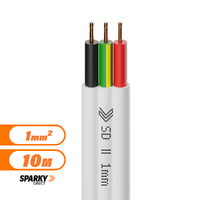
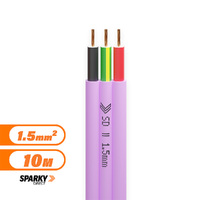
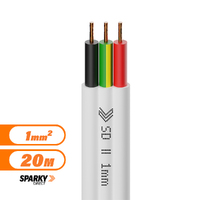
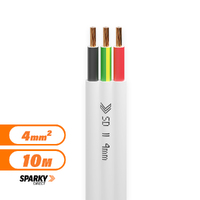
Search Results:
Search Results:
Search Results:
Search Results:
A cable cut is a length of electrical cable separated from a larger reel or drum and supplied to a specific dimension. The practice exists because most jobs do not need a full 100 metre roll. Buying cuts gives electricians the right amount for the task without locking capital into surplus stock.
Cable cuts solve a simple problem: matching cable supply to actual job requirements. A single downlight installation, a short subcircuit run, or a small repair rarely justifies a 100 metre drum. Pre-measured cuts mean less waste on the job and less leftover cable cluttering the workshop.
Cable cuts and cable stripping are different tasks. A cut separates one length of cable from another. Stripping removes the outer sheath or conductor insulation to expose copper for termination. Both are essential, but they need different tools and different techniques. Cutting tools like cable cutters are designed for clean transverse cuts, while wire strippers remove insulation without nicking the conductor.
Cutting happens at multiple points in an installation. The first cut separates the run from the drum or supplied length. Further cuts trim cable to size at junction boxes, switchboards, and accessory points. Final cuts prepare conductors for termination. Each stage has different precision and cleanliness requirements.
A poor cable cut creates downstream problems. Crushed conductors increase resistance and generate heat. Frayed strands sit poorly in lugs and connectors. Damaged insulation reduces the dielectric margin between live parts and earth. Compliance with AS/NZS 3000 wiring rules requires that terminations be sound, and a clean cut is the starting point for a sound termination.
Different cable constructions need different cutting approaches. The cutter that handles light TPS will struggle with armoured cable, and vice versa. Matching tool to cable is the first decision before any cut is made.
Twin and earth cable is the workhorse of Australian residential wiring. Sizes from 1.0mm to 6.0mm cover most lighting and power circuits. Common sizes include 1.5mm twin and earth cable for lighting and 2.5mm twin and earth for general purpose outlets. Standard side cutters handle these sizes cleanly when sharp.
Multicore and flexible cables include twin core cables, three-core flex, and multistrand control cables. The fine strands inside flex are easily crushed or splayed by blunt tools. Sharp diagonal cutters or dedicated cable shears keep the strand bundle intact.
Armoured and large-section cable defeats hand pliers. Steel-wire armour, thick XLPE insulation, and large copper cross-sections need ratchet, hydraulic, or battery-driven cable cutters. Attempting heavy cable with the wrong tool damages the cable and the tool.
Data cable, coaxial cable, and low-voltage signal runs often use very fine conductors. Standard electrical cutters work, but precision cutters or rotary tools produce a cleaner end face. Clean ends matter most where the cable terminates into a connector with tight tolerances.
Cable cutting tools fall into four broad classes. Each class targets a different cable size range and a different work pace. Most working sparkies carry two or three classes to cover the daily mix.
Side cutters are the daily-driver tool. For TPS up to 6.0mm and most flex, a sharp pair of cutting pliers handles the work. Look for hardened jaws and a comfortable handle profile, since most electricians make hundreds of cuts per week.
Ratchet cutters use a pawl mechanism to multiply hand force across several strokes. They cut cable that would defeat standard pliers, including 16mm and 25mm copper. The trade-off is slower per-cut time, so they suit occasional heavy work rather than rapid trimming.
Shears and rotary cutters produce a square end with minimal deformation of the cable cross-section. This matters most for screened, coaxial, and data cable where the connector relies on a clean termination geometry.
Battery and hydraulic cutters appear on commercial and industrial sites where heavy cable is the rule rather than the exception. They handle armoured and large copper effortlessly. The capital cost is significant, so they suit contractors with consistent heavy-cable workload.
Tool selection comes down to three questions: what cable size, what frequency of use, and what budget. Getting any one of these wrong leads to either a damaged tool, damaged cable, or money tied up in capacity that never gets used.
Match the cutter to the largest cable you cut regularly, not the largest you might ever encounter. A tool sized for daily use with rare overflow is more useful than one sized for the worst case.
| Cable Type | Recommended Cutter | Typical Use |
|---|---|---|
| 1.0mm to 4.0mm TPS | Side cutters or diagonal pliers | Lighting, GPO subcircuits |
| 6.0mm TPS, single-core to 16mm | Heavy diagonal or ratchet | Submain, oven, hot water |
| 25mm and above copper | Ratchet, battery, or hydraulic | Switchboard mains, service runs |
| Coax, data, control | Cable shears or rotary cutter | TV, network, low-voltage |
Standard cutters are quicker per cut. Ratchet cutters handle a wider size range and reduce hand strain. For an apprentice doing mostly residential work, standard pliers cover most of the day. For a commercial sparky terminating submains, the ratchet earns its place on the belt.
Quality cutters share a few features. The cutting edges hold their shape under repeated load. The pivot stays smooth without play developing. Insulated handles, where rated, carry a VDE 1000V mark. Spare-part availability extends the working life of the tool well beyond the warranty period.
The two common mistakes are buying too small and buying too big. Too small means damaging both cable and tool when capacity is exceeded. Too big means slow, awkward work on cables the tool was not designed to handle. The second mistake is buying cheap on a high-use item, where worn jaws turn into daily frustration.
A clean cut starts with an accurate measurement. The metres a job actually needs differ from the metres the plan suggests, because terminations, bends, and slack at junction boxes all consume length.
Walk the route before cutting. A measuring wheel or laser distance meter gives a baseline. Add allowance for vertical drops, ceiling space crossings, and the path around obstacles. The straight-line distance on a plan is rarely the cable distance on site.
Each end needs extra length to reach into the enclosure and to allow for at least one re-termination if the first attempt fails. A common rule of thumb is 300mm to 500mm at each end for switchboard work, less for accessory boxes. Building this allowance into the cut prevents the frustration of a cable that comes up short.
Mark the cable at the cut point before triggering the cutter. A permanent marker, a wrap of tape, or a pre-printed cable tag all work. On longer runs, mark the route and the destination at both ends so the cable is identifiable after installation.
For higher volumes, a cable drum dispenser keeps the cable controlled and reduces tangling. For lower volumes and pre-measured cuts, the cable can simply be paid out by hand. The choice depends on the run length and the cable size.
Cable cutting is routine work, but routine work is where complacency causes accidents. The hazards are low compared with live testing, yet a slipped cutter or an energised conductor still injures people every year.
Always isolate, lock out, and test before cutting any cable that may be live. Use an approved safety lock out kit at the source. Test with a proven instrument, then test the instrument against a known source after cutting to confirm the test was valid.
Eye protection is essential. Cable strands and small fragments fly during heavy cuts. Safety glasses handle most situations. For armoured cable or large copper, add cut-resistant gloves. Safety insulated gloves are required where the cable cannot be confirmed dead.
Cutting live cable is a serious safety event. The arc, the noise, and the personal risk are out of proportion to any time saved. Industry practice and AS/NZS 3000 require isolation before any conductor is cut. There is no acceptable shortcut.
The conductor inside the sheath is what the cut is really about. Crushed copper has higher resistance and cannot be reliably terminated. Cut perpendicular to the cable axis, with the cutter fully closed in one motion. Do not partially cut and twist to break.
Armoured cable carries the additional hazard of springy steel wire. Cut ends can flick out unexpectedly. Wear cut-resistant gloves and keep the cable controlled at both sides of the cut. Large cable is heavy and awkward; plan the catch and the support before triggering the cutter.
Cut quality determines termination quality. A cable cut at an angle or with crushed strands cannot make a sound mechanical or electrical connection. The seconds spent making a clean cut are repaid many times over in reduced rework.
A square cut presents a flat conductor face to the lug or terminal. This maximises contact area and minimises resistance. An angled cut leaves part of the strand bundle outside the contact zone, raising temperature under load.
After the cut, the next steps are sheath removal, conductor exposure, and crimp or termination. Use a crimping tool matched to the lug type. Inspect the crimp visually and tug-test it before final installation. Quality lugs matched to the conductor size are essential.
Failures from poor cuts include high-resistance terminations, intermittent connections, and overheating at the termination point. These failures often appear weeks or months after installation, when load conditions reach the marginal joint. The fix is rework, which is far more expensive than the few seconds a clean cut takes in the first place.
AS/NZS 3000 sets the framework for terminations and connections. Clean cuts are the foundation. Sheaths must not be damaged inside the enclosure. Conductor strands must be intact and fully captured under the terminal screw or in the lug barrel. Inspection and testing under the standard expects compliant terminations.
Choosing the cable comes before cutting it. The wrong cable type or size leads to wasted material at best and a non-compliant installation at worst.
AS/NZS 5000 covers cable construction and rating in Australia and New Zealand. It defines insulation grades, conductor classes, and operating temperatures. Cable sold for installation work must meet these standards. Look for the standard reference printed on the sheath when verifying a product.
Cable size is determined by current rating, voltage drop over the run, and the installation method. A 2.5mm twin and earth handles most general purpose 20A circuits in domestic work. Larger sizes carry larger loads or longer runs. AS/NZS 3008 sets out the calculation method.
The common cable families on Australian sites include flat TPS for residential subcircuits, single-core building wire for switchboard wiring, orange circular for sub-mains and three-phase work, and solar cable for PV installations. Each has its own size range and cutting characteristics.
Flat TPS cuts cleanly with a sharp diagonal cutter. Round multicore needs a perpendicular cut to maintain the shape. Single-core building wire is straightforward at light gauges and needs ratchet or hydraulic cutters at heavier gauges. Solar cable, with its UV-rated thicker sheath, often benefits from cable shears.
The choice between cuts and full drums is a question of volume, cash flow, and storage. Both have a place in a working trade business.
Pre-cut lengths mean no leftover stock taking up space in the van or workshop. Capital is matched to the job rather than tied up in a partial drum. For one-off jobs, repairs, and short subcircuits, cuts make practical sense.
For high-volume installation work, the per-metre cost of a full drum is usually lower than a series of small cuts. Larger projects, repeat residential builds, and commercial fitouts almost always justify buying drums of 100 metres or more.
The waste reduction case for cuts is straightforward: you only buy what you need. The efficiency case for drums is also clear: fewer orders, fewer deliveries, no per-cut handling time. The right answer depends on the specific job mix.
Sparky Direct supplies cable cuts in standard increments alongside full cable drums. Delivery is Australia-wide, with cuts typically dispatched the next business day where stock allows.
A complete cable cutting kit covers daily light work, occasional heavy work, and the precision tasks that come up on data and low-voltage installations.
The starter kit covers most residential work: a sharp pair of side cutters, a pair of wire strippers, and a measuring tape. Adding a basic ratchet cutter extends the range to occasional heavier cable. Wattmaster and Sterling both supply trade-grade hand tools at reasonable cost.
Commercial and industrial work adds battery cable cutters, large ratchet cutters, and dedicated cable shears for screened cable. Klein Tools and Fluke supply higher-end test and tool gear for the commercial market.
Cutting tools last longer when looked after. Wipe down after use to remove copper swarf. Apply a light oil to the pivot. Store in a tool roll or organiser rather than loose in a bucket where edges chip against other tools.
Upgrading is worth the spend when a tool starts costing time. Worn jaws that no longer cut cleanly waste seconds on every cut. Multiplied across a working week, this adds up. Insulated handles rated to 1000V also offer a safety margin where work near energised parts is unavoidable.
Cable cutter pricing in Australia spans a wide range. Entry-level pliers start around twenty dollars, while industrial battery-powered cutters reach into the thousands. The right price point matches the use case.
For most working sparkies, a quality side cutter sits in the range of forty to ninety dollars. Ratchet cutters typically run from one hundred to four hundred dollars depending on capacity. Battery and hydraulic units start above one thousand dollars and climb steeply.
Budget tools have a place for occasional or backup use. For daily trade work, professional-grade tools repay the higher upfront cost in durability and consistency. The cheap pair that needs replacing every six months is rarely cheaper in the long run.
Trade supply channels offer competitive pricing on regular consumables, including cable. Establishing an account allows for tracking purchases and accessing trade pricing on volume orders.
For trade work, delivery time often matters more than the per-item price. A cable cut that arrives the day after order keeps the job moving. Sparky Direct ships Australia-wide with next-business-day dispatch on in-stock items.
Practical buying decisions come down to matching tools and cable to the work actually being done. Avoiding the common mistakes saves both money and frustration.
A residential maintenance sparky needs a different tool kit from an industrial commissioning electrician. Match the kit to the typical job. Adding capacity for the occasional outlier is fine, but the daily work should drive the core choices.
Common mistakes include buying tools sight unseen on price alone, ignoring spare-part availability, and over-specifying capacity. Reading reviews from other trade users gives a clearer picture than the brochure claims.
Cable cutters used daily justify a higher per-unit spend. The amortised cost over years of use is small, while the daily quality-of-work benefit is significant. Cheap-feeling tools end up being replaced more often.
Sparky Direct stocks electrical tools from CABAC, Electra-Cables, and other trusted trade brands, alongside the full cable range. Orders ship Australia-wide.
Watch 1.5mm SDI Red Cable | Single Double Insulated 1.5mm Red 20mtr Cut | 15SDI-R20 video
Watch 29-514 | Cable Cutters - 165mm Ultimax Pro Black Panther Gen II video
Watch Wattmaster WATMVA200W | 225mm 1000V Insulated Cable Cutting Pliers video

This is a good quality product with reasonable delivery time and well-packed for transportation. Easy to use and the insolation is thick as standard.
I needed a small length of twin and earth for an extra downlight. Perfect and a great price and prompt delivery.
easy to cut nice thick jacket i can use it with confidence and a great price will purchase again
Quality products in stock • Fast Australia-wide delivery • Competitive trade pricing
Browse Cable Cuts → Get Expert Advice →Yes. Buying only what you need can reduce overall project costs.
Cable cuts are available from Sparky Direct, offering access to compliant electrical products with Australia-wide delivery.
Delivery options depend on the supplier and location, with availability across metropolitan and regional Australia.
Yes. Cable cuts are commonly available to order online from electrical suppliers.
Warranty coverage depends on the manufacturer and supplier, with conditions applying to correct use.
Consider cable type, conductor size, required length, compliance markings, and installer recommendations.
Yes. When compliant cables are installed by licensed electricians, cable cuts are safe and reliable.
Yes. Cable cuts are commonly used by licensed electricians and trade professionals.
Yes. Multiple cable cuts can usually be ordered together depending on supplier availability.
Yes. Cable cuts are available in a wide range of sizes and types.
Yes. Cable cuts are taken from the same compliant cable reels as full-length products.
Yes. They are ideal for maintenance and replacement tasks where full rolls are unnecessary.
Yes. Cable cuts are commonly used during renovations and upgrades.
Cable cuts refer to electrical cables supplied in custom or pre-cut lengths rather than full rolls or drums.
Yes. Shorter lengths are easier to transport, handle, and store on site.
Cable cuts help avoid excess material and are ideal for repairs, additions, or small electrical projects.
Yes. Installation must be carried out by a licensed electrician to ensure safety and compliance.
Yes. Cable cuts are supplied in specified lengths based on customer requirements.
Yes. Cable cuts are typically labelled with cable type and specifications for easy identification.
No. Cable cuts are taken from standard compliant cable reels and retain the same quality and performance.
Yes. Cable cuts are also suitable for light commercial and maintenance applications.
Yes. Cable cuts are commonly used in residential electrical projects and upgrades.
Many cable types can be supplied as cuts, including TPS, SDI, twin & earth, building wire, and data cables.
Yes. Cable cuts are supplied from compliant cable stock that meets relevant AS/NZS electrical standards.
Cable cuts allow you to purchase only the length required, helping reduce waste and manage costs.