Search Results:
Search Results:
Search Results:
Search Results:
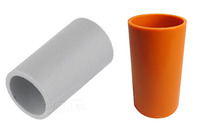
A conduit coupling is a sleeve fitting designed to bond two pieces of conduit into one continuous length. PVC versions slide over the conduit ends and are bonded with solvent conduit glue. Metal versions thread, clamp, or compress onto the conduit ends to form a rigid join.
Conduit protects cables from physical damage, moisture, and UV exposure. A coupling holds that protection together at every join. Without a proper coupling, joints become weak points where conduit can pull apart, water can enter, or cables can chafe against rough edges.
Raceway integrity refers to the continuous, unbroken path that protects wiring along its full length. Couplings preserve this path by sealing each join. They also keep the conduit run rigid enough to resist movement during the cable pull and after installation.
Couplings differ from elbows, tees, and adaptors in one key way: they join two pieces of the same conduit type and size in a straight line. Other fittings change direction, branch the run, or transition between systems. Knowing which fitting to use is part of every electrician's daily work.
Standard PVC couplings are the most common type used in rigid PVC conduit work. Slip couplings have no internal stop. They allow one piece of conduit to slide fully through, which is useful when joining pre-fixed conduit ends that cannot be moved.
Threaded couplings screw onto the threaded ends of metal conduit and produce a strong mechanical join. Compression couplings clamp onto the conduit using a ferrule and nut arrangement. Both types are used where mechanical strength and earth continuity matter most.
Corrugated flexible conduit uses gland style fittings rather than glued couplings. The gland body grips the corrugations and forms a sealed connection to a junction box, accessory, or rigid conduit transition.
White communications couplings are used with communications conduit for Telstra, NBN, and data wiring. They match the white conduit colour and fit the standard 20mm and 25mm communications conduit sizes used across Australian installations.
Each coupling is designed for a specific conduit type. PVC couplings suit PVC conduit. Metal couplings suit metal conduit. Mixing types creates seal failures, mechanical weakness, and compliance issues. Always match the coupling to the system being installed.
| Factor | PVC Couplings | Metal Couplings |
|---|---|---|
| Cost | Low | Higher |
| Joining method | Solvent weld | Threaded or compression |
| Earth continuity | Not applicable | Required and tested |
| Best for | General domestic and commercial | Industrial, mechanical risk |
| Corrosion | Excellent resistance | Depends on finish |
Metal conduit systems can serve as part of the earthing path. Every coupling in the run must keep that path unbroken. Loose threads, corroded joins, or gaps reduce conductivity and may breach AS/NZS 3000 requirements. Compression and threaded couplings are tested for this purpose.
Medium duty grey conduit and heavy duty orange conduit have different ID and OD tolerances. Couplings sized for one may fit loosely on the other. Always check the coupling label and the conduit duty rating before joining the run.
PVC conduit expands and contracts with temperature change. In long external runs exposed to summer heat, this movement can pull joints apart or buckle the conduit. Australia's climate makes thermal expansion a daily design consideration, particularly in roof spaces and outdoor sites.
An expansion coupling has an internal sliding sleeve that moves with the conduit as it changes length. One end is fixed, the other slides freely. This absorbs the thermal movement without stressing the rest of the run.
Expansion couplings are typically required on long surface runs, on roof tops, and where conduit crosses building expansion joints. Manufacturer guidance and AS/NZS 3000 set the spacing rules. Always check the project specification and the local conditions.
Place expansion couplings where the run is straight and unsupported clamps allow movement. Avoid placing them inside junction boxes or directly against rigid mounts. Saddles either side of the coupling should let the conduit slide as the temperature changes.
Indoor work usually allows medium duty grey couplings. Outdoor and exposed runs use heavy duty orange or UV stable grades. Underground and direct burial runs need couplings rated for that purpose, paired with the correct conduit and proper depth cover.
Medium duty couplings suit residential and light commercial use. Heavy duty couplings handle higher mechanical stress and are colour coded orange. Match the coupling duty to the conduit duty: pairing medium duty fittings with heavy duty conduit creates a weak link in the run.
Standard PVC couplings provide a sealed join when correctly solvent welded. Where higher ingress protection is needed, gland fittings, sealed adaptors, or encased junctions are used. The IP rating depends on the assembly and the surrounding fittings, not the coupling alone.
Frequent mistakes: using the wrong size, mixing duty ratings, choosing PVC couplings for metal conduit, or skipping expansion couplings on long external runs. Each one creates a future failure point that costs more to fix than to prevent.
Conduit couplings come in nominal sizes that match the conduit they join. The most common sizes used in Australian electrical work are 20mm and 25mm. Larger sizes such as 32mm, 40mm, and 50mm are used for sub-mains, larger cable bundles, and industrial work.
The coupling nominal size must match the conduit nominal size exactly. A 25mm coupling joins 25mm conduit, not 20mm or 32mm. Plain reducers and screwed reducers are used when transitioning between sizes within a run.
A correctly sized coupling slides over the conduit with a snug, even fit. Loose couplings will not solvent weld properly. Tight couplings can split when forced. Both situations compromise the seal and the mechanical strength of the join.
Always check the printed size on both the conduit and the coupling. Mixing brands occasionally produces tolerance differences that affect the fit. Test a sample join before committing to a full installation if working with unfamiliar product combinations.
Cut the conduit square. Deburr the inside edge. Apply PVC conduit cement to the conduit and the inside of the coupling. Push the conduit fully home and hold for several seconds. Wipe excess cement and let the joint set before pulling cables.
Cut and thread the conduit ends to the correct depth. Apply approved thread sealant if specified. Tighten the coupling so the conduit ends meet inside, which preserves earth continuity. Use locknuts where the coupling enters an enclosure or accessory.
For corrugated runs, push the corrugated conduit into the gland body until it seats. Tighten the gland nut by hand and finish with a half turn using a spanner. Avoid overtightening: this can split the gland or strip the thread. Check straight gland fittings for compatibility with the corrugated size before fitting.
Dry joints (no solvent cement), under-pushed conduit (less than full insertion), cement applied only to the outside, and skipped expansion couplings on long runs. Each of these failures shows up later as cracks, leaks, or pulled-apart joints.
AS/NZS 2053 covers conduit and conduit fittings used in electrical installations. It defines duty ratings, dimensions, and performance tests. Compliant couplings carry markings that identify the standard, the size, and the duty class they meet.
AS/NZS 3000 sets out installation rules for wiring systems, including conduit and fittings. The rules cover mechanical protection, support spacing, and earth continuity for metal systems. Couplings used in compliant work must meet these baseline requirements.
Where the installation requires a specified IP rating, the entire assembly is rated, not the coupling on its own. The chosen coupling, conduit, glue, and adjacent fittings must all be compatible with the rating target for the environment.
Inspectors check that fittings carry compliance markings, that joints are properly made, and that earth continuity is maintained on metal systems. Using unmarked or unrated fittings can fail inspection and force costly rework on completed jobs.
Couplings are used to extend conduit through walls, ceilings, and slab penetrations in homes. Most residential work uses 20mm and 25mm medium duty rigid conduit with matching grey couplings.
Commercial fitouts and industrial sites often use heavier sizes, metal conduit, and a wider mix of fittings. Expansion couplings, gland fittings, and screw style couplings appear more often in these environments due to longer runs and more demanding conditions.
Underground runs use heavy duty orange conduit and matching couplings rated for direct burial. Solvent welded joints must be fully sealed before backfill, and the run must follow the depth and protection rules in AS/NZS 3000.
Communications work uses white couplings with rigid communications conduit, including NBN and Telstra installations. The colour code keeps comms runs clearly separated from power cabling on site.
A coupling joins like to like in a straight line. An adaptor changes from one type to another, such as plain to screwed. A connector links the conduit to an accessory, junction box, or enclosure. Each fitting has a defined role and is not interchangeable.
Compression couplings clamp the conduit using a ferrule that deforms slightly under load. Set screw couplings hold the conduit using one or more grub screws. Compression types generally offer better moisture resistance and are preferred for damp or external installations.
Standard couplings have an internal stop that centres the join. Slip couplings have no stop, which lets the coupling slide over a fixed conduit end. Use slip couplings only when access is restricted: a standard coupling produces a stronger join in normal work.
The right coupling delivers a sealed, mechanically sound, compliant join that lasts for decades. Wrong selection creates failure points that may not appear immediately but show up under thermal cycling, moisture exposure, or mechanical load.
A correctly solvent welded PVC coupling produces a watertight seal. Threaded metal couplings rely on full thread engagement and approved sealant where the environment requires it. Both methods, properly applied, prevent water and dust from entering the conduit run.
The join should be as strong as the conduit itself. PVC solvent welded joins, when fully cured, are essentially homogeneous. Metal threaded joins maintain conduit strength provided thread engagement is full and the coupling is the correct grade.
For metal conduit systems used as part of the earth path, every coupling must maintain low resistance contact. Loose threads, corroded surfaces, or partial engagement can raise the resistance and reduce the safety of the earthing system.
Conduit couplings are largely maintenance free in domestic and commercial work. Industrial sites may include the conduit system in periodic inspection programs. Visual checks for cracks, displacement, or corrosion are usually sufficient for compliance.
PVC couplings are inexpensive per unit and widely stocked. Sparky Direct lists 20mm, 25mm, 32mm, 40mm, and 50mm grey couplings at trade prices. Larger and specialist couplings cost more, but represent a small fraction of total job material cost.
Buying couplings in bulk reduces the per-unit price and makes sense for fitout, new builds, and repetitive work. For one-off jobs or small repairs, individual units keep the order simple and the spend low.
Compliance check: very cheap couplings without AS/NZS markings may not meet duty or dimensional requirements. The risk includes inspection failure, future rework, and warranty exposure. Stick to marked, branded, and rated product from established suppliers.
Established trade counters and online wholesalers like Sparky Direct stock a deep range of compliant fittings at trade prices. Online ordering speeds up procurement and removes the need to drive between counters when chasing specific sizes or duty ratings.
Stock and delivery speed matter when a job is held up. Sparky Direct ships across Australia quickly, with orders placed early in the day usually moving the same day where stock is available.
Start with the conduit type, size, and duty rating. Add the environment factors: indoor, outdoor, underground, or wet area. Then choose a coupling that matches all of those points. Sparky Direct's range covers the standard combinations used on Australian sites.
Ordering 20mm couplings for 25mm conduit, mixing medium and heavy duty parts, forgetting the glue, and skipping expansion couplings on long external runs are the four most common mistakes. A short pre-order checklist removes most of these issues.
Add roughly five to ten percent extra couplings to the count, particularly on first fix and rough-in work. The cost of carrying a few spares is much lower than the cost of a return trip for a single fitting that is missing on the day.
Sparky Direct stocks a deep range of conduit couplings alongside conduit bends, solid elbows, conduit junction boxes, and conduit saddles. The catalogue covers leading brands including Clipsal, NLS, and 4Cabling.
Club Clipsal is Australia's largest electrician community offering trade rewards, business support, and exclusive benefits. When you nominate Sparky Direct as your preferred wholesaler, we automatically apply your Clipsal spend points to your Club Clipsal account daily.
Entry-level offering coaching, mentoring, and training discounts
Unlock exclusive industry tools and networking events
Access Toyota fleet offers and business software discounts
Maximum benefits, including VIP experiences and rewards
1. Sign Up: Create your Club Clipsal account at clipsal.com/club-clipsal or via the iCat mobile app
2. Nominate Sparky Direct: Select Sparky Direct from the wholesaler dropdown menu in your profile
3. Add Email: Enter your Sparky Direct account email address in the membership number field
4. Start Earning: Every dollar spent on Clipsal products earns points automatically
Redeem points from the rewards store, including gift cards, tools, and experiences. Access business summits, product training, and industry networking events. Receive early access to new product launches and special promotions. Connect with fellow electricians via the Club Clipsal community app.
Watch NLS 30075 | 20mm PVC Coupling Plain Grey | TC20 video
Watch NLS 30076 | 25mm PVC Coupling Plain Grey | TC25 video
Watch Clipsal 263-25-GY | 25mm Plain to Screwed PVC Conduit Male Coupling video

These coupling just work. I go through hundreds a week on air conditioning drains. They are strong and fit snug. Also the delivery to Sydney was fast. Cheers
This is the second time I am ordering from Sparky and I am satisfied with the prices, the products, the service and the delivery. I used all these products to make a crop protection cage for my backyard crop to protect from birds:)
I couldn't believe the difference in savings on both products compared to the prices from the biggest electrical products supplier that I had using. I'll keep using Sparkie Direct without hesitation.
Quality products in stock • Fast Australia-wide delivery • Competitive trade pricing
Browse Conduit Couplings → Get Expert Advice →Yes, they create clean joins between conduit lengths.
Sparky Direct supplies conduit couplings Australia-wide, offering reliable electrical conduit fittings with convenient delivery.
Conduit couplings are securely packaged and delivered via standard courier services.
Unused products are generally eligible for return according to the seller’s returns policy.
Warranty coverage varies by manufacturer and typically covers defects in materials or workmanship.
Yes, conduit couplings are typically sold as individual fittings.
Yes, selecting the correct size ensures a secure and compliant connection.
Once installed correctly, they generally require no maintenance.
Yes, they are commonly used when extending or modifying conduit runs.
They may be visible in surface-mounted installations or concealed within walls and ceilings.
Quality couplings are designed to withstand everyday installation conditions.
Yes, they prevent gaps where cables could be exposed.
Yes, they are a standard fitting in electrical conduit installations.
They are used to extend conduit runs and maintain continuous protection for electrical cables.
They are straightforward for trained professionals to install as part of a conduit system.
They ensure conduit runs remain continuous and cables stay protected.
Yes, they help keep conduit runs straight and properly aligned.
Yes, they are designed to hold conduit lengths firmly in place.
Yes, they are suitable for residential, commercial, and light industrial applications.
Yes, they are commonly used in indoor electrical conduit systems.
Yes, they are available to suit common conduit sizes such as 20mm, 25mm, and 32mm.
They are typically made from durable PVC or similar materials suitable for electrical installations.
Yes, they are designed for use with rigid electrical conduit.
Conduit couplings are fittings used to join two lengths of electrical conduit together securely.
Quality conduit couplings are manufactured to meet relevant AS/NZS electrical and safety standards when installed correctly.