Search Results:
Search Results:
Search Results:
Search Results:
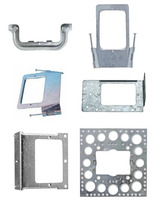
Find the best powerpoint mounting brackets here at Sparky Direct. [ Read More ]
A mounting bracket creates a fixed anchor point for switchgear inside a wall opening. The bracket is fixed to the wall lining or stud, and the GPO mechanism then screws into threaded lugs on the bracket. Without that anchor, the device sits loose against the plasterboard and pulls forward every time a plug is inserted or removed.
A bracket is a flat or shaped piece of galvanised steel or moulded polymer with two threaded fixing points spaced 84mm apart, matching the standard mounting centres on Australian switchgear. The bracket sits behind the wall lining and presents those threaded points at the surface, ready to receive the cover plate screws.
For cavity walls, the bracket clips through a cut-out in the plasterboard and grips the back of the lining when the cover plate screws are tightened. For solid walls, the bracket fixes directly to the substrate with masonry plugs or self-tapping screws. Either way, the bracket transfers all plug-and-pull force from the GPO into the wall structure rather than the lining.
A correctly installed bracket sits parallel to the wall face, holding the switchgear plumb and flush. This gives the cover plate a clean line against the lining and stops the GPO from rocking when in use. The bracket is what separates a tidy, professional fit-off from a loose, lifting outlet.
AS/NZS 3000:2018 requires all electrical accessories to be secured so they cannot move under normal use. A loose GPO is not just a finish issue: it is a wiring fault waiting to happen.
Every plug withdrawal applies pulling force to the GPO. Without a bracket, that force travels through the conductors and into the terminals. Over time, terminals loosen, conductors fatigue, and arcing becomes a real risk. A solid bracket distributes the load into the wall instead.
Switchgear that rocks under load wears out faster. The mechanism flexes, internal contacts misalign, and the cover plate cracks at the screw points. A rigid bracket holds the device square for the full service life of the installation.
Clause 4.5 of AS/NZS 3000:2018 covers the mechanical mounting of accessories. Switchgear must be fixed to a substrate capable of withstanding the forces applied during normal operation. A fit-off without a proper bracket fails this requirement, regardless of how neat it looks. For the full set of electrical accessories needed to meet the Wiring Rules on a fit-off, Sparky Direct stocks the trade range.
Four main bracket types cover virtually every wall situation an electrician will face on residential and commercial work.
Sparky Direct stocks all four types from Clipsal, HPM and other trade brands. The full range of mounting blocks covers solid, shallow, corrugated and gang-specific options.
The wall type drives the bracket choice. Picking the wrong bracket for the substrate is the single most common cause of failed fit-offs.
Standard 10mm or 13mm plasterboard takes a C-clip plaster bracket or a stud bracket fixed to the timber frame. C-clips work well on retrofit cuts where there is no stud nearby. Stud brackets are preferred during new build because they fix to solid timber.
Flat or bent stud brackets nail or screw directly to the stud during rough-in. The bracket sets the depth of the GPO before the lining goes on, so the cover plate finishes flush once the wall is sheeted.
Solid masonry needs a different approach. A masonry plaster bracket is plugged and screwed into the substrate, often paired with a set-in conduit box. For surface mounting on rendered or tiled walls where chasing is not practical, a mounting block sits proud of the surface and accepts the GPO directly.
Plasterboard retrofit: C-clip. New build with timber frame: flat stud bracket. Brick or concrete: masonry plaster bracket. Surface install on solid wall: mounting block.
Brackets are sized to match the gang count of the switchgear. The gang size refers to the number of mechanism positions the cover plate covers.
The standard size for most domestic GPOs and light switches. A single gang bracket measures around 116mm by 75mm and accepts one GPO mechanism or up to four switch mechs in some series. Suits the bulk of 10 amp power points on residential work.
Used for double GPOs and combination switch and outlet plates. The larger footprint, around 116mm by 116mm, gives the cover plate two sets of mounting points. Common on kitchen benches, home offices and any spot where a single double GPO replaces two singles.
Quad brackets carry four GPO positions in a single plate. They are widely used in workshops, garages and commercial fit-outs where high outlet density is required. Six-gang brackets exist for data and patch-panel applications. The wider power points range covers all gang configurations from one to six.
Bracket material affects durability, installation feel, and long-term holding strength. Three options dominate the trade market.
Galvanised steel is the industry standard for stud brackets and masonry brackets. Steel resists deformation when the GPO is screwed down hard, and the galvanising prevents rust where the bracket sits inside damp wall cavities. Look for a thickness of 0.8mm or greater for trade-grade work.
Polymer C-clips and clip-in brackets are quick to install and immune to corrosion. Quality varies more than with steel, however. Cheap nylon clips can flex under load or crack when over-tightened. Trade-grade polymer clips from established brands hold their shape over years of service.
The bracket must hold the GPO without flexing when a 10A plug is inserted or removed. Steel brackets achieve this through gauge, polymer brackets through wall thickness and rib design. Cutting corners on bracket quality is a false economy: the bracket is the cheapest part of the install and the part most likely to cause callbacks if it fails.
Most Australian switchgear shares a common 84mm fixing centre, so brackets are largely cross-compatible. Some series have specific fitment quirks worth noting.
The Clipsal Powerpoint range, the HPM Excel and Linea series, the DETA Slimline range and PDL 600 series all use the standard 84mm fixing centre. Generic plaster brackets fit all of these without issue. Hager Silhouette and Legrand ranges use the same standard.
The Clipsal Iconic system and Clipsal Classic ranges both fit standard brackets, but Iconic uses a separate grid and skin assembly that adds depth. Older Clipsal 2000 series mechanisms sit slightly deeper too. Always check the depth callout on the bracket against the GPO depth before settling on a part.
Misalignment usually traces back to a bent bracket or a hole that was not cut square. Setting the bracket level before tightening the cover plate prevents the GPO from sitting cocked. A spirit level on the bracket face during fit-off solves the problem at source.
Bracket orientation affects both function and finish. Australian installations follow consistent conventions for height and alignment.
Most GPOs sit horizontally with the longest cover plate axis running parallel to the floor. Vertical orientation is used for specific applications: behind appliances, in cabinetry, or where space dictates. Brackets are produced in both orientations. The Clipsal 155 horizontal and 156 vertical series are the trade standards.
General GPOs in living areas typically sit at 300mm above finished floor level. Kitchen bench GPOs sit 150mm above the benchtop. Switches sit at 1100mm to 1200mm. These heights are convention rather than code, but they match the expectations of most builders and clients.
A spirit level, a stud finder, a 92mm hole saw and a sharp utility knife cover most bracket installs. For volume work, a marking template speeds up the rough-in stage and keeps GPO heights consistent across a job.
Bracket fitting falls inside the licensed electrical work envelope. The mechanical install can look simple, but it is part of a circuit that must comply with the Wiring Rules.
Licensed Work Only: All powerpoint installations in Australia must be carried out by a licensed electrician. DIY electrical work on fixed wiring is illegal in every state and territory and voids home insurance.
State licensing rules require a registered electrical worker for any work on fixed wiring. The bracket itself is not the regulated component, but the GPO it carries is. Bracket selection and fixing form part of the broader compliance picture.
For plasterboard, mark the bracket position with a spirit level, cut the opening with a 92mm hole saw or sharp blade, and check the cavity is clear of pipework or insulation. For solid walls, drill the fixing points first, then fit the bracket and check for square before final tightening.
The bracket must sit parallel to the wall face. If the bracket cocks back, the cover plate will not finish flush and the GPO will sit proud at one corner. Sight along the bracket before screwing the GPO down to confirm it is square.
Brackets are required on every fixed-wiring installation. The application drives the bracket type and quantity.
Stud brackets are fitted during rough-in, before the plasterboard goes up. The electrician sets the bracket depth so the front face will sit flush with the finished lining. This is the cleanest install method and gives the strongest fix.
C-clip plaster brackets are the go-to for retrofit and repair work where the lining is already in place. The clip drops into a saw-cut opening and grips behind the board when the GPO is tightened. No access to the cavity is required.
Commercial fit-outs often use multi-gang brackets to consolidate outlets. Industrial sites add weatherproof GPOs and metal-clad boxes. Workshop walls clad in corrugated steel or plywood call for surface-mount blocks rather than cavity brackets.
Three factors guide bracket selection: the wall, the switchgear, and the install stage.
Confirm the wall type, the GPO series, and whether the work is rough-in or retrofit. From there, the bracket choice is straightforward. New build timber framing: flat stud bracket. Plasterboard retrofit: C-clip. Brick wall: masonry bracket. Surface install: mounting block.
For dry interior locations, polymer C-clips and standard galvanised brackets are fine. For damp areas, garages and outbuildings, stick with galvanised steel. For salt-spray or industrial environments, specify stainless or the heavier-gauge masonry brackets.
On runs of multiple outlets along a kitchen bench or office wall, plan the bracket layout before cutting any holes. Standard GPO spacing is 600mm centre-to-centre for benches. A consistent bracket type across the run keeps all the cover plates at the same depth.
| Wall Type | Best Bracket | Install Stage | Notes |
|---|---|---|---|
| Plasterboard (10-13mm) | C-Clip Plaster Bracket | Retrofit or new build | Fast install, no stud needed |
| Timber stud frame | Flat Stud Bracket | Rough-in | Strongest fix, set before lining |
| Metal stud frame | Self-tapping Stud Bracket | Rough-in | Use Tek screws into the stud |
| Brick or concrete | Masonry Plaster Bracket | Either stage | Plug and screw into substrate |
| Surface (rendered, tiled) | Mounting Block | Surface-mount | Sits proud of the wall face |
| Corrugated steel | Corro Mounting Block | Surface-mount | Profile-matched base |
A mounting bracket should outlast the switchgear it carries. The fixings might be the cheapest item on the bill of materials, but they carry every plug-and-pull cycle for the life of the install.
Quality brackets resist bending under cover-plate screw torque. Cheap brackets can twist when the GPO is fitted, leaving the device cocked. Sticking with trade-grade galvanised steel or reinforced polymer eliminates the issue.
The threaded fixing points are the contact between bracket and GPO. Stripped threads from over-torquing or repeated removal lead to a loose outlet. Clean steel threads on a fresh bracket grip the cover plate screws first time and hold them through years of service.
Plasterboard moves slightly with humidity, and timber frames settle. A bracket that grips properly absorbs that movement without affecting the GPO. C-clips with strong spring tension and stud brackets with multiple fixings are the best performers over a 20-year service life.
Brackets are a high-volume consumable on most jobs. Stocking up makes sense for any electrician running multiple installs a week.
Sparky Direct ships powerpoint mounting brackets across Australia at trade pricing. The full range includes Clipsal 154, 155 and 156 series, plus NLS plaster clips, mounting blocks and stud brackets.
Generic budget brackets exist, and they fit. The question is how long they last and how square they sit. Trade-grade brackets cost a few dollars more per piece and save callbacks. For one-off DIY-adjacent jobs, the cheap option might suffice. For paid work that carries a warranty, trade-grade is the only sensible call.
Boxes of 50 or 100 brackets work out cheaper per piece and keep the van stocked. Sparky Direct offers volume pricing on full carton orders for trade customers.
Three errors account for most bracket-related problems on site.
A C-clip in a brick wall does not work. A masonry bracket on plasterboard is overkill and difficult to fix. Match the bracket to the substrate before cutting any holes.
Single gang brackets do not stretch to fit double GPOs. Double brackets do not centre a single GPO. Confirm the gang count of the switchgear and the cover plate before ordering brackets.
A bracket fitted out of square, or a hole cut too large for the bracket to grip, leaves the GPO loose. Mark up carefully, cut to template, and check level before tightening the GPO.
When a fit-off does not work, the bracket is often the culprit.
If the GPO rocks or sits proud, check the bracket. A C-clip that has not gripped fully needs the cover plate screws backed off, the bracket reseated, and the screws retightened evenly. A bent bracket needs replacement.
An oversized hole is the usual cause. The bracket needs solid lining around the cut to grip against. If the hole has been opened up too far, switch to a metal bracket with extended wings or move to a different bracket type.
Most compatibility issues are depth-related. The cover plate screws bottom out before tightening, or the GPO sits too deep. Check the bracket depth callout against the GPO body. A shallower bracket or a deeper mounting block usually resolves the issue.
Club Clipsal is Australia's largest electrician community offering trade rewards, business support, and exclusive benefits. When you nominate Sparky Direct as your preferred wholesaler, we automatically apply your Clipsal spend points to your Club Clipsal account daily.
Entry-level offering coaching, mentoring, and training discounts
Unlock exclusive industry tools and networking events
Access Toyota fleet offers and business software discounts
Maximum benefits, including VIP experiences and rewards
1. Sign Up: Create your Club Clipsal account at clipsal.com/club-clipsal or via the iCat mobile app
2. Nominate Sparky Direct: Select Sparky Direct from the wholesaler dropdown menu in your profile
3. Add Email: Enter your Sparky Direct account email address in the membership number field
4. Start Earning: Every dollar spent on Clipsal products earns points automatically
Redeem points from the rewards store, including gift cards, tools, and experiences. Access business summits, product training, and industry networking events. Receive early access to new product launches and special promotions. Connect with fellow electricians via the Club Clipsal community app.
Watch CLIPSAL 154 | Plaster C-Clip | 10mm Depth video
Watch CLIPSAL 155 | Horizontal Metal Mounting Bracket NO NAILS video
Watch NLS 30051 | Universal Stud Bracket Flat video

This is an exceptional way to place power points on walls that are not plaster, great quality, great price, very well made, easy to purchase and very speedy delivery. I wouldn’t shop anywhere else
As most of them look the same. But with clipsal bands the screw alway go in first time . The threads are alway right with screws that come clipsal product or clipsal screws and dont they dont rust as easy
Product type availability is great. Notification from purchase to delivery is outstanding. The quality of the mounting block is excellent.
Quality products in stock • Fast Australia-wide delivery • Competitive trade pricing
Browse Powerpoint Mounting Brackets → Get Expert Advice →Yes, they can speed up installation in plasterboard walls.
Sparky Direct supplies plaster brackets Australia-wide, offering reliable powerpoint mounting bracket solutions with convenient delivery.
Plaster brackets are securely packaged and delivered via standard courier services.
Unused products are generally eligible for return according to the seller’s returns policy.
Warranty coverage varies by manufacturer and typically covers defects in materials or workmanship.
Yes, plaster brackets are typically sold as individual electrical mounting accessories.
Yes, selecting the correct size and type ensures secure and compliant installation.
Once installed correctly, they generally require no maintenance.
Yes, they are commonly used when adding or relocating outlets in existing walls.
No, they are concealed behind the mounted accessory.
They are designed to assist with accurate positioning of accessories.
Yes, they allow powerpoints and switches to sit neatly against the wall.
Yes, when correctly fitted, they hold accessories firmly in place.
Plaster brackets are electrical mounting accessories used to fix powerpoints, switches, and data outlets into plasterboard walls.
Yes, they are a standard fixing method for modern plasterboard walls.
They are ideal for cavity walls where a traditional wall box is not practical.
Yes, they are suitable for residential, commercial, and light industrial applications.
Yes, they are widely used in residential electrical installations.
Yes, they are available to suit single and double gang electrical accessories.
They are typically made from durable metal or reinforced plastic.
Yes, they are suitable for switches, powerpoints, and data or TV outlets.
Yes, they are commonly used as powerpoint mounting brackets.
Yes, they are specifically designed for plasterboard and cavity wall installations.
Quality plaster brackets are manufactured to meet relevant AS/NZS electrical and safety standards when installed correctly.
They provide a secure mounting point for electrical accessories without the need for traditional wall boxes.