Search Results:
Search Results:
Search Results:
Search Results:
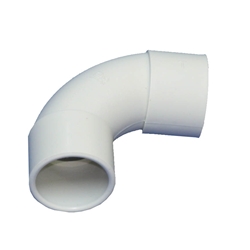
Find the best Solid Elbows Electrical Conduit Fittings here at Sparky Direct. [ Read More ]
A solid elbow is a one-piece, moulded fitting with two sockets set at a fixed angle. Each socket is sized to match a standard medium duty rigid conduit trade size. Cables are pulled through before the conduit is glued to the elbow, because the sealed body prevents access once the run is complete. The shape steers cables around obstacles while the rigid wall keeps them protected from impact, abrasion, and crushing loads.
Solid elbows give a clean, low-profile direction change with no removable cover to leak, rattle, or be tampered with. They are preferred where the run is hidden in a wall, slab, or ceiling and access is not needed once cables are in. The closed body also offers better ingress protection than an inspection elbow with a screwed lid, which is why solid types dominate underground and external installs.
A pull (or inspection) elbow has a screwed or clipped cover so cables can be fed in stages around the bend. A solid elbow has no such opening. Pull elbows suit long, complex runs with several direction changes, where pulling tension would otherwise damage the cable. Solid elbows suit shorter, simpler runs where cables can be drawn through in one pass.
The 90 degree solid elbow is the workhorse, used for vertical-to-horizontal transitions and changes around corners. 45 degree elbows soften long sweeps and reduce pulling tension on cables. 22.5 degree elbows are less common in PVC conduit work but appear in specialised steel and stainless ranges for shallow direction changes.
Standard solid elbows come in 20mm, 25mm, 32mm, 40mm, and 50mm trade sizes to match the most widely used rigid conduit ranges in Australian wholesale electrical supply. The 20mm and 25mm sizes account for the majority of light and small power circuits in residential and commercial work.
Short radius elbows have a tighter inside curve and fit into compact spaces. Long radius elbows have a gentler curve and reduce sidewall pressure on cables during pulling. Where cable pulling tension is a concern, a long radius fitting or a sweep bend is the better option.
Australian conduit work is metric. Sizes are stated in millimetres (20mm, 25mm, 32mm, 40mm, 50mm) and refer to the nominal outside diameter of the conduit. Imperial-sized fittings appear only in legacy work or imported industrial systems and are not interchangeable with metric conduit without an adaptor.
A solid elbow is built around one conduit standard and one wall thickness. Medium duty grey PVC and heavy duty orange PVC use the same nominal sizes but different colour coding for visibility in slabs and trenches. Always match the elbow to the conduit grade in use to keep the system compliant and the joint properly sealed.
PVC is the dominant material for solid elbows in Australian electrical work. It resists most ground chemicals, does not corrode, and bonds reliably with PVC conduit glue. Heavy duty orange PVC is the standard choice for direct burial and slab work.
Steel solid elbows appear in industrial settings where mechanical impact is a real risk. They are heavier, more expensive, and require specialist threading or compression fittings. They are not part of the typical PVC-based residential or light commercial range.
Aluminium is used in lightweight or coastal applications where weight matters and corrosion is a concern. Stainless steel is reserved for hygienic and extreme environments such as food processing, chemical plants, and marine work. These are specialty items and not stocked alongside the everyday PVC range.
| Material | Typical Use | Key Strength | Limitation |
|---|---|---|---|
| PVC (medium duty) | Internal walls, ceilings, light commercial | Cost, weight, corrosion resistance | Lower impact rating than HD or steel |
| PVC (heavy duty) | Underground, slabs, external runs | Impact and crush resistance | Heavier and more rigid to handle |
| Steel | Industrial, hazardous areas | Mechanical protection | Cost, weight, corrosion in damp |
| Stainless steel | Hygienic, marine, chemical | Corrosion resistance | High cost, specialist supply |
Trade size refers to the nominal outside diameter of the conduit it fits. A 25mm elbow accepts 25mm OD conduit. The internal bore is slightly smaller and varies between medium duty and heavy duty grades. This is why mixing brands or duty grades on the same run is risky without checking dimensions.
The simplest rule: the elbow trade size must match the conduit trade size. A 20mm elbow goes with 20mm conduit, a 25mm elbow with 25mm conduit, and so on. Where a size change is needed in the run, a conduit coupling or reducer fitting is used in line, not the elbow itself.
Cable fill capacity drops as soon as a run includes bends. Several tight elbows in series can make a long pull impossible. Where multiple direction changes are unavoidable, plan for an inspection point or substitute a long sweep bend for one of the elbows to reduce sidewall pressure.
Forcing the wrong size elbow onto a conduit causes a leaky, weak joint. Going down a size to save cost reduces fill capacity and can force a redesign mid-job. Match the elbow to the calculated conduit size for the cable count, not to what is cheapest on the shelf.
Internal dry runs in walls and ceilings are well served by medium duty grey PVC. Slabs, trenches, and external runs need heavy duty orange PVC or steel for impact protection. Aggressive chemical or marine environments call for stainless steel. The environment dictates the material before any other consideration.
For a clean 90 degree direction change in a short run, a standard solid elbow is the right choice. For longer runs, runs with multiple bends, or pulls of stiffer cable, a sweep bend or long radius fitting reduces tension and protects insulation. Use 45 degree elbows where two shallower bends are easier on the cable than one tight 90.
Stiffer cables (large TPS, multi-core, armoured) need gentler bends. Soft, single-core cables tolerate tighter elbows. As a working guide, count tight 90 degree elbows: more than two between draw points usually justifies an inspection elbow or a junction box for staged pulling.
Heavy duty orange PVC solid elbows are the standard fitting for underground sub-mains, lighting circuits, and submains feeding outbuildings. They handle the crush load of backfill and the chemical exposure of damp soil far better than medium duty alternatives.
In commercial fit-outs, solid elbows route conduit through stud walls, service risers, and ceiling spaces. Grey medium duty fittings dominate here because the runs are protected from impact by the building structure and a clean appearance matters in exposed sections.
Industrial work mixes heavy duty PVC with steel where machinery, forklifts, or chemical exposure threaten the conduit. Solid elbows are used at fixed direction changes; inspection elbows go at points where future modifications are likely.
Solar DC and AC runs from rooftop arrays to inverters use orange heavy duty PVC for UV protection and impact resistance. Solid elbows seal the bends from water ingress, which is critical on roof and wall transitions where rainfall pools.
Cut the conduit square with a PVC pipe cutter or fine-tooth saw. Deburr the inside and outside of the cut. Burrs left in the bore cut cable insulation during the pull and create weak points in the glued joint.
Support both sides of the elbow with conduit saddles within 150mm of the fitting. This prevents the joint from carrying the weight of the conduit run, which is the most common cause of joint failure over time.
Plan the pull before gluing. Each 90 degree bend roughly doubles the tension required to draw cable through. Where the run includes more than two tight elbows, break the pull at a junction box or inspection elbow rather than fighting tension that may damage insulation.
Cable pulling lubricant cuts sidewall pressure and protects insulation on long runs. Apply it to the cable, not the bore. Solvent cement on the conduit-to-elbow joints needs to be applied evenly to both surfaces and the fitting pushed home with a quarter turn to spread the adhesive.
Solid elbows themselves are not IP rated as standalone components. The seal of the system depends on properly glued joints and on any junction boxes or terminations meeting the required IP rating for the location. Specifications vary by manufacturer and conduit grade.
Heavy duty orange PVC includes UV stabilisers for direct sunlight exposure. Medium duty grey is intended for protected runs and degrades faster under prolonged UV. For external runs above ground, specify orange heavy duty or apply a UV-rated coating.
PVC resists salts, weak acids, and most ground chemicals. In aggressive industrial environments, check the chemical compatibility of the specific PVC formulation. Stainless steel is the default for highly corrosive or hygienic settings.
Hazardous area installations (zoned for explosive atmospheres) require certified fittings and specific installation practices that fall outside standard PVC conduit work. These projects need products certified to the relevant AS/NZS hazardous area standard, not general-purpose elbows.
AS/NZS 2053 covers conduit and conduit fittings for electrical installations. Compliant solid elbows meet the dimensional, material, and performance requirements of this standard. Look for marking on the fitting confirming compliance, particularly for buried and slab work.
AS/NZS 3000:2018 sets the rules for selection and installation of conduit systems in Australia. The Wiring Rules dictate minimum mechanical protection, depth of burial, separation from other services, and accessibility requirements that influence whether a solid or inspection elbow is appropriate.
Conduit fittings used in fixed electrical installations must be installed by a licensed electrician in accordance with AS/NZS 3000. Using compliant, standards-marked fittings is part of meeting that obligation. Non-compliant or unmarked fittings can void inspection sign-off.
Products from major Australian suppliers carry compliance markings that align with AS/NZS 2053 and the relevant electrical safety regulations in each state. Where a supplier cannot provide compliance documentation, the product is not suitable for licensed installation work.
Solid elbows seal the bend and offer better ingress protection. Inspection elbows have a removable cover that helps with cable pulling on long, multi-bend runs. Use solid elbows where access is not needed; use inspection elbows where staged pulls or future access matter.
Corrugated (flexible) conduit bends naturally and removes the need for fitted elbows in many runs. Flexible systems suit retrofit and tight spaces. Rigid solid elbows are preferred where mechanical strength, neat appearance, and a sealed run are required.
Field bending PVC with a heat gun is sometimes used to create a custom radius, but the result is harder to control and weakens the wall if overheated. A factory-moulded solid elbow gives a consistent, compliant bend with no risk of thinning or kinking.
| Scenario | Best Fitting |
|---|---|
| Short hidden run, one or two 90 degree changes | Solid elbow |
| Long run with multiple bends, staged pull required | Inspection elbow plus solid elbows |
| Tight retrofit through framing | Corrugated conduit |
| Underground run, direct burial | Heavy duty solid elbow |
| Long, gentle direction change | Sweep bend |
Heavy duty PVC elbows are tested to higher impact loads than medium duty. In trafficable areas, slabs, and external walls, this difference matters. Replacing a damaged underground elbow is invasive, so it pays to specify the higher rating from the start.
Sharp internal edges, undersized fittings, and excessive pulling tension are the three common causes of damage at elbows. Using compliant fittings, choosing a long radius option for stiff cable, and lubricating the pull mitigate all three.
UV exposure, ground movement, chemical contact, and thermal cycling all shorten conduit life. Specifying the correct grade for the environment, and using consistent fittings throughout the run, gives the longest service life with the fewest field repairs.
Solid elbows are not maintainable in service: there is no cover to open. Where the design needs future access (cable upgrades, fault finding), a junction box or inspection elbow at strategic points keeps the system serviceable without compromising the sealed sections.
PVC solid elbows are low-cost commodity fittings. Pricing scales with size: 20mm and 25mm are the cheapest, 40mm and 50mm cost more per unit but still represent a small share of the total job cost. Steel and stainless equivalents are several times the price of PVC.
For larger projects, buying boxed quantities of common sizes (20mm and 25mm) reduces unit cost and avoids running short on site. For one-off jobs, individual units are convenient and avoid surplus stock.
Unbranded or unmarked elbows from non-electrical retailers may not meet AS/NZS 2053. Using them in licensed work risks inspection failure and rework. Stick to recognised electrical suppliers who can confirm compliance.
Trade counters offer same-day pickup but limited stock visibility. Online electrical wholesalers like Sparky Direct list the full range with stock levels and trade pricing, which suits planned jobs and repeat orders. Both have a place in a working tradie's supply chain.
Most common solid elbow sizes in PVC are stocked in volume and ship same or next day from a well-run online wholesaler. Less common sizes (50mm, specialist materials) may carry longer lead times. Plan ahead for non-standard items.
Start from the job spec: conduit grade, trade size, and environment. Buy elbows that match those three points exactly. Mixing grades or sizes on the same run creates compliance and reliability issues that take longer to fix than they save at purchase.
Top buyer mistakes: ordering grey medium duty for a job that calls for orange heavy duty. Under-counting bends and running short mid-job. Choosing 20mm fittings to save cost when 25mm would have given easier cable fill. Mixing brands without checking dimensional compatibility.
Count bends from the drawings, then add 10 to 15 percent for waste, breakages, and last-minute changes. Common sizes (20mm, 25mm) are cheap enough that surplus is rarely a real cost. Larger sizes warrant tighter counting.
Sparky Direct stocks the major Australian PVC ranges, including National Light Sources (NLS), Clipsal, and Trader. The Sparky Direct catalogue lists trade sizes from 20mm through 50mm with stock visibility and Australia-wide shipping.
Club Clipsal is Australia's largest electrician community offering trade rewards, business support, and exclusive benefits. When you nominate Sparky Direct as your preferred wholesaler, we automatically apply your Clipsal spend points to your Club Clipsal account daily.
Entry-level offering coaching, mentoring, and training discounts
Unlock exclusive industry tools and networking events
Access Toyota fleet offers and business software discounts
Maximum benefits, including VIP experiences and rewards
1. Sign Up: Create your Club Clipsal account at clipsal.com/club-clipsal or via the iCat mobile app
2. Nominate Sparky Direct: Select Sparky Direct from the wholesaler dropdown menu in your profile
3. Add Email: Enter your Sparky Direct account email address in the membership number field
4. Start Earning: Every dollar spent on Clipsal products earns points automatically
Redeem points from the rewards store, including gift cards, tools, and experiences. Access business summits, product training, and industry networking events. Receive early access to new product launches and special promotions. Connect with fellow electricians via the Club Clipsal community app.
Watch Clipsal 245-20-GY | 20mm PVC Solid Elbow video
Watch NLS SE25 | 25mm PVC Solid Elbow video
Watch NLS SE20 | 20mm PVC Solid Elbow | 30081 video

This is the second time I am ordering from Sparky and I am satisfied with the prices, the products, the service and the delivery. I used all these products to make a crop protection cage for my backyard crop to protect from birds:)
This is a very compact tee and great if space is limited and looks so much better than the bulk inspection tees. Wires are easy to pass through the branch section, however consideration must be given to wire qty and sizing along with the number of through wires due to the minimal area for the radia
Couldn't believe how quickly these items were shipped, and delivered. Product was supplied as described. Will be purchasing again.
Quality products in stock • Fast Australia-wide delivery • Competitive trade pricing
Browse Solid Elbows → Get Expert Advice →Yes, they are a standard fitting in many conduit installations.
Sparky Direct supplies solid elbows electrical conduit fittings Australia-wide, offering reliable conduit solutions with convenient delivery.
Solid elbows are securely packaged and delivered via standard courier services.
Unused products are generally eligible for return according to the seller’s returns policy.
Warranty coverage varies by manufacturer and typically covers defects in materials or workmanship.
Yes, solid elbows are typically sold as individual conduit fittings.
Yes, planning ensures the correct fittings are used and the installation remains compliant.
Yes, they are commonly used when modifying or extending existing conduit runs.
Quality solid elbows are designed to withstand everyday installation conditions.
They are compact and designed to fit neatly into conduit runs.
Yes, they are commonly used in surface-mounted installations.
Yes, they provide smooth direction changes that help protect cables.
They are straightforward to install as part of a compliant conduit system.
Solid elbows are rigid conduit fittings used to change the direction of electrical conduit runs at a fixed angle.
Yes, they create tidy and professional-looking conduit runs.
They provide a clean, consistent bend and help save time during installation.
Yes, they help maintain conduit integrity and protect cables at direction changes.
Yes, they are suitable for residential, commercial, and light industrial applications.
Yes, they are commonly used in indoor electrical conduit systems.
Yes, they are available to suit common conduit sizes such as 20mm, 25mm, and 32mm.
They are typically made from durable PVC or other materials suitable for electrical installations.
Yes, they are specifically designed for use with rigid electrical conduit.
Quality solid elbows are manufactured to meet relevant AS/NZS electrical and safety standards when installed correctly.
They are used to route conduit neatly around corners while maintaining cable protection.
They are commonly available in standard angles such as 90 degrees and 45 degrees.