Search Results:
Search Results:
Search Results:
Search Results:
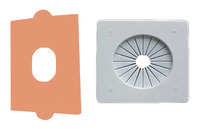
A conduit flange cover is a flat or domed plate that seals against the surface of an enclosure where a conduit either enters, was meant to enter, or has been removed. The plate sits over the entry point and is fixed by screws, threaded collars, or push-fit retainers. A gasket or moulded seal sits between the plate and the enclosure wall, forming a continuous barrier against the outside environment.
The cover transfers any mechanical load on the conduit entry into the enclosure body rather than the conduit itself. It also provides a tidy finish to surface-mounted installations and prevents accidental contact with internal terminals through unused entries.
Every unsealed entry on an enclosure is a potential failure point. Water tracking down a vertical conduit run can pool inside an enclosure, corrode terminals, and short-circuit live parts. Insects nest in unsealed entries and chew through insulation. Dust accumulates on contactors and reduces heat dissipation.
A correctly fitted flange cover restores the enclosure to its rated environmental protection. This matters most on outdoor switchboards, industrial control panels, and any installation exposed to washdown, rain, or airborne contamination.
Flange covers, conduit plugs, lock rings, and locknuts all play different roles. A conduit plug closes the open end of a conduit run that has been brought into the enclosure but not used. A lock ring holds a conduit fitting tight against the enclosure wall from inside. A locknut secures a threaded gland from outside. A flange cover, by contrast, blocks an opening or entry point at the enclosure wall itself.
The flange cover is the last line of defence between the inside of an enclosure and the environment. It works alongside cable glands and straight glands on cabled entries. Where a knockout has been opened but the entry is no longer needed, the flange cover restores the seal.
Single-entry covers are designed for one conduit size: 20mm, 25mm, 32mm, 40mm, 50mm, or larger. They suit installations where a single circuit enters the enclosure or where one entry has been opened in error and needs to be sealed.
Multi-entry plates carry several pre-cut or pre-marked openings, allowing two, three, or four conduits to land into a single plate. They are common on distribution boards where multiple sub-circuits enter from a common cable tray or below-slab penetration.
Knockout blanking plates seal openings created when an enclosure knockout has been removed but the corresponding conduit was not installed. These are very common on switchboards during prefabrication, where multiple knockouts are popped during install and only some get used.
Surface-mount flange covers sit proud of the enclosure wall and are visible from outside. Flush-mount designs sit within a recess in the enclosure face and present a near-flat finish. The choice depends on the enclosure design and the aesthetic and clearance requirements at the installation site.
PVC covers are the most common choice for general-purpose electrical work. They resist corrosion, cost less than metal alternatives, and suit indoor and most outdoor applications. Polycarbonate offers better impact resistance and UV stability, which matters for exposed outdoor switchboards.
Steel covers, typically galvanised or zinc-plated, suit metal switchboards and industrial enclosures. They handle higher mechanical loads and resist impact damage from tools or falling objects. Galvanising protects against rust in normal outdoor conditions.
Stainless steel grades, usually 316, are specified where standard galvanising will not last: coastal sites, food-processing plants, swimming-pool plant rooms, and chemical-handling areas. The premium is justified by service life and reduced replacement cost.
Non-conductive covers are required where the cover sits adjacent to live parts and a metallic plate would create a flashover risk. PVC and polycarbonate fill this role for most applications. Specialised flame-retardant grades carry V-0 ratings to UL 94 and suit safety-critical control panels.
| Material | Best For | Limitations |
|---|---|---|
| PVC | General indoor and standard outdoor use | UV degradation over many years if unprotected |
| Polycarbonate | Outdoor and impact-prone locations | Higher cost than PVC |
| Galvanised steel | Industrial enclosures, mechanical protection | Conductive, heavier |
| Stainless steel 316 | Marine, coastal, chemical environments | Highest cost |
Australian electrical conduit follows nominal outside-diameter sizing. The common range starts at 16mm and steps up through 20mm, 25mm, 32mm, 40mm, 50mm, and 63mm. Most domestic and light commercial work uses 20mm and 25mm. Industrial feeds and sub-mains push into the 40mm to 63mm range.
The flange cover must match the conduit entry it seals. A 25mm cover on a 32mm entry leaves a gap that defeats the purpose of fitting the cover. Most ranges include reducing covers, which seal a larger opening down to a smaller conduit, or stepped covers that suit knockouts of different diameters in a single product.
Some flange covers thread directly into the conduit entry; others sit flat against a knockout and fix with screws. Threaded covers must match the conduit thread form, typically Australian metric for PVC systems. Plain push-fit covers depend on accurate knockout sizing for a clean seal.
The most common sizing error is fitting a cover designed for a metal-trade knockout to a PVC conduit entry of the same nominal size. The two systems use slightly different reference dimensions, and the gasket may not seat correctly. Always confirm the cover is rated for the conduit material and the enclosure it is fitted to.
IP ratings to AS/NZS 60529 use two digits. The first digit, 0 to 6, describes protection against solid objects and dust ingress. The second digit, 0 to 9, describes protection against water. An IP66 enclosure resists dust ingress completely and withstands powerful water jets. IP67 adds temporary submersion.
The flange cover must match or exceed the IP rating of the enclosure. Fitting an IP54 cover to an IP66 box drops the whole system to IP54. The weakest link sets the rating. This applies to gaskets, seal type, and the integrity of the fixing arrangement.
Critical compliance point: An enclosure is only rated as high as its lowest-rated entry. One mismatched flange cover can compromise the entire enclosure rating, and any compliance certification that depended on it.
Gaskets are usually neoprene, EPDM, or silicone. Neoprene suits general work. EPDM offers better UV and ozone resistance for outdoor exposure. Silicone tolerates a wider temperature range but costs more. O-rings work in threaded covers where the seal compresses radially rather than axially.
Gaskets harden, compress, and lose elasticity with age. Heat cycling, UV exposure, and chemical attack accelerate this process. A cover that sealed perfectly five years ago may now leak under the same conditions. Inspection during routine maintenance catches degraded seals before water ingress causes a fault.
Indoor switchboards in dry conditioned spaces tolerate basic PVC. Outdoor units exposed to sun and rain need polycarbonate or UV-stabilised PVC. Coastal sites within 10km of the surf push the choice to stainless steel or marine-grade polymers. Industrial plants with chemical exposure require material data sheets cross-checked against the contaminants on site.
Indoor work usually targets IP20 to IP44, depending on the location and likelihood of accidental water exposure. Outdoor general-purpose installations target IP54 or IP66. Industrial process areas often specify IP66 or IP67 with chemical-resistant materials. Hazardous-area installations have separate certification requirements that flange covers must meet alongside the enclosure.
Mechanical protection deals with impact and vandalism. Environmental sealing deals with water, dust, and pests. A cover can excel at one and underperform on the other. PVC seals well against water but cracks under hard impact. Steel resists impact but corrodes if the coating fails.
The most common mistakes are picking a cover for cosmetic match rather than seal performance. Mixing PVC and metal-trade systems on the same enclosure is another. So is assuming a cover is weatherproof because it physically fits. Always check the IP rating on the product datasheet, not the visual appearance.
Domestic and commercial electrical enclosures rely on flange covers wherever conduits enter or where unused knockouts must be sealed. Meter boxes are another common application, particularly the large meter cabinets used on multi-residential and commercial sites.
Process plants run high concentrations of conduit into motor control centres, soft starters, and PLC panels. The volume of entries on these enclosures means flange covers are specified by the carton, not by the unit. Sealing failure on a single entry can shut a process line.
Outdoor enclosures face direct rain, UV, and temperature swings. Underground pull boxes face hydrostatic pressure during rain events. Flange covers on these installations need confirmed IP66 or IP67 sealing and material specifications matched to the burial environment.
Data centres treat dust as a primary enemy because particulate accumulation degrades cooling and contaminates connectors. Flange covers seal cable-management entries on equipment cabinets and floor pedestals. Communication conduits entering these spaces also need matched covers.
A clean knockout is the foundation of a good seal. Burrs, paint flakes, and bent metal at the edge of a knockout prevent the gasket compressing evenly. Deburr the opening, wipe it clean, and confirm the cover sits flat before fixing.
Most flange covers fix with two or four screws. Torque the screws progressively in a cross pattern, similar to a vehicle wheel. This gives even gasket compression. Hand-tight on small PVC covers is usually correct. Metal covers on industrial enclosures may have specified torque values in the datasheet.
The gasket should compress visibly but not bulge out from the joint. Over-compression damages the gasket structure and creates a worse seal than under-compression. The aim is uniform contact around the full circumference of the seal.
Visual inspection confirms the cover sits flat and the gasket is uniformly compressed. For high-spec applications, a flow or pressure test verifies the seal under simulated service conditions. For routine work, a hose test on outdoor enclosures confirms water-tightness before commissioning.
If a cover refuses to sit flat against the enclosure wall, do not force the screws tight. Something is wrong: a burr in the knockout, the wrong cover size, or paint built up on the mating surface. Tightening through the problem cracks the cover or distorts the enclosure.
Fitting a 25mm cover to a 32mm knockout, or vice versa, creates an immediate leak path. Loose fitment is the single most common installation error and almost always shows up as water damage within the first wet season.
Cranking screws beyond hand-tight on PVC covers cracks the cover body. Over-tightening on metal covers extrudes the gasket out of the joint, leaving a thin, hardened ring that cannot recover. Both faults destroy the seal.
Painting over a knockout, skipping deburring, or ignoring corrosion on the mating surface all prevent a good seal. The gasket needs a clean, flat, undamaged surface to seat against.
The whole point of a flange cover is to preserve the rated IP performance of the enclosure. Mismatched gaskets, missing screws, and damaged covers all drop the rating. Any installation that depends on the IP rating for compliance must verify the cover matches.
Discoloration, brittleness, and surface chalking on PVC covers indicate UV degradation. Rust streaks below a metal cover suggest galvanising failure. Water marks inside an enclosure point straight at a failed seal, even if the cover looks intact from outside.
Most failures are gasket failures rather than cover failures. The cover body usually outlasts the seal by several cycles. Many manufacturers sell replacement gaskets as a separate part, which makes routine maintenance cheaper than full cover replacement.
Industrial sites with periodic electrical safety verification typically inspect enclosures every 12 to 36 months, depending on the duty cycle and environment. Outdoor domestic switchboards rarely get formal inspection, which is why hidden water damage often only surfaces during a fault investigation.
Where an existing enclosure needs to step up from IP54 to IP66 because of a use change, replacing all flange covers and glands is usually the lowest-cost path. Replacing the enclosure is the alternative but rarely justified by the price difference.
AS/NZS 3000:2018, the Wiring Rules, sets the framework for electrical installation in Australia and New Zealand. The Rules require that enclosures, including their entries and seals, suit the environment they are installed in and that the installation does not compromise the rated performance of any component.
AS/NZS 60529 defines the IP rating system used across Australian electrical product certification. Manufacturers test products to this standard and declare the rating on the product or datasheet. The rating only applies if the product is installed and used as the manufacturer specifies.
Compliance applies to the enclosure as installed, not just the parts in the box. Every entry, seal, and cover contributes to the overall result. Non-conforming components compromise compliance even when the headline enclosure carries the right certification.
Look for products marked with the relevant Australian standard reference, supplier identifier, and IP rating. Products from established Australian distributors carry traceable certification documentation. Generic imports without clear marking are a compliance risk regardless of how good they look.
Locknuts and bushings retain a conduit fitting against an enclosure wall. They do not seal an unused entry. A flange cover, by contrast, is the correct part for closing an opening that has no conduit running through it. The two products solve different problems.
A weatherproof gland seals around a cable that passes through the entry. A flange cover seals an entry where no cable passes. Where a knockout was opened in error, or a circuit has been removed, the gland is not the right part: the flange cover is.
Multi-entry plates are appropriate when several conduits enter through a common region of the enclosure wall. They reduce the number of separate seals and simplify the gasket arrangement. They cost more per unit than single-entry covers but less than the equivalent number of singles.
Some modern enclosures ship with factory-fitted gland plates that combine multiple cable glands and flange covers in a single removable panel. These reduce installation time and ensure a consistent seal across all entries. The trade-off is higher initial cost and reduced flexibility in entry placement.
Moisture inside an enclosure is the single largest cause of premature failure on outdoor electrical equipment. Effective flange covers, correctly fitted, prevent the failure path entirely. The cost of replacing a damaged switchboard far exceeds the cost of fitting good seals during install.
Water tracking inside an enclosure raises the risk of insulation breakdown, earth leakage, and arc faults. Each of these is a safety event for any person working on or near the equipment. Sealed entries are a basic prerequisite for safe long-term operation.
Material selection matched to environment determines service life. A 316 stainless cover in a fertiliser plant outlasts a galvanised cover by an order of magnitude. The correct specification at install time avoids costly replacement during operation.
Good flange cover practice supports the long-term integrity of the whole electrical installation. It prevents unplanned downtime, reduces maintenance burden, and protects the warranty position on the equipment inside the enclosure.
Single-entry PVC flange covers typically sit in the low single-digit dollars per unit at trade pricing. Multi-entry plates and metal covers run higher. Stainless steel marine-grade products sit at the top of the range. Pricing varies with brand, IP rating, and bulk packaging.
Buying flange covers in carton quantities reduces the per-unit cost significantly. Sites that turn through multiple switchboard installs in a year benefit from holding stock. Single-job buyers are usually better off ordering only what is needed plus a small spare allowance.
Unbranded imports occasionally appear on auction sites at a fraction of the trade price. The risk is non-compliance with Australian standards, missing IP certification, and gasket materials of unknown specification. The saving rarely justifies the compliance and rework risk.
Local trade counters offer immediate pickup and direct conversation with staff who know the products. Online wholesalers like Sparky Direct offer a wider range, transparent pricing, and direct delivery. Many electricians use both, depending on whether the job is planned or last-minute.
Sparky Direct ships orders Australia-wide with stock visibility on the product pages. Standard items in conduit fittings and enclosures dispatch quickly. For large quantities, contacting the trade desk before ordering confirms lead time and any volume pricing.
Start with the enclosure datasheet and the conduit schedule. List every entry by size, type, and required IP rating. Order covers and matching glands from the same range where possible. Mixing brands works but adds compatibility risk on gasket dimensions.
The classic buyer mistakes are ordering nominal sizes without checking the enclosure thread form, forgetting spares for common sizes, and confusing flange covers with gland plates. Both products seal entries but in different ways. Read the product description before adding to cart.
For a typical commercial fit-out, count the entries on the schedule and add 10 to 20 percent for spares. Knockouts get opened in error, gaskets get damaged during install, and last-minute design changes happen. Holding spares is cheaper than waiting on overnight delivery.
Sparky Direct stocks flange covers, conduit junction boxes, and the full range of supporting fittings under one account. Trade pricing is available, and the catalogue covers the common Australian conduit sizes from 16mm to 63mm.
Club Clipsal is Australia's largest electrician community offering trade rewards, business support, and exclusive benefits. When you nominate Sparky Direct as your preferred wholesaler, we automatically apply your Clipsal spend points to your Club Clipsal account daily.
Entry-level offering coaching, mentoring, and training discounts
Unlock exclusive industry tools and networking events
Access Toyota fleet offers and business software discounts
Maximum benefits, including VIP experiences and rewards
1. Sign Up: Create your Club Clipsal account at clipsal.com/club-clipsal or via the iCat mobile app
2. Nominate Sparky Direct: Select Sparky Direct from the wholesaler dropdown menu in your profile
3. Add Email: Enter your Sparky Direct account email address in the membership number field
4. Start Earning: Every dollar spent on Clipsal products earns points automatically
Redeem points from the rewards store, including gift cards, tools, and experiences. Access business summits, product training, and industry networking events. Receive early access to new product launches and special promotions. Connect with fellow electricians via the Club Clipsal community app.
Watch Universal Cover 16-32mm | UCF video
Watch NLS 30188 | 20mm Corrugated Conduit Straight Gland video
Watch NLS 30359 | 12mm PVC Cable Gland Black video

You use these when u want to hide a mistake or pretty up a hole when the conduit poles through an eve or wall, grab the conduit slide it on then push to the wall or you may need to glue it on.
This is a very compact tee and great if space is limited and looks so much better than the bulk inspection tees. Wires fit nicely and the cap fits snug, easy to install and at a great price too.
Excellent product. Great Price and Quality. I am a purchasing officer for a trailer company and we use sparky direct for all our PVC fittings and supplies. Highly recommend.
Quality products in stock • Fast Australia-wide delivery • Competitive trade pricing
Browse Flange Covers → Get Expert Advice →Yes, they are a standard accessory used to finish conduit and cable entries.
Sparky Direct supplies flange covers Australia-wide, offering reliable finishing accessories for electrical installations with convenient delivery.
Flange covers are securely packaged and delivered via standard courier services.
Unused products are generally eligible for return according to the seller’s returns policy.
Warranty coverage varies by manufacturer and typically covers defects in materials or workmanship.
Yes, flange covers are typically sold as individual electrical accessories.
Yes, choosing the correct size ensures proper coverage and a neat finish.
Once installed correctly, they generally require no maintenance.
Yes, they are commonly used when upgrading or tidying existing electrical work.
Quality flange covers are designed to withstand everyday installation conditions.
They are designed to be discreet while providing a clean finish.
Yes, they reduce friction and protect cables at entry points.
They are straightforward for trained professionals to fit during installation.
Flange covers are electrical accessories used to neatly cover and finish conduit or cable entry points on walls, ceilings, or enclosures.
Yes, they provide a tidy and professional finish to electrical work.
They improve safety and appearance by covering sharp edges and exposed gaps.
Yes, they help protect cables from abrasion at entry points.
Yes, they are primarily designed for indoor electrical installations.
Yes, they are suitable for residential, commercial, and light industrial environments.
Yes, they are widely used in residential electrical applications.
Yes, they are available to suit common conduit and cable sizes.
They are typically made from durable plastic or metal suitable for electrical installations.
Yes, they are commonly used where conduit enters walls, ceilings, or electrical enclosures.
Quality flange covers are manufactured to meet relevant AS/NZS electrical and safety standards when used correctly.
They are used to conceal gaps around conduit or cables and provide a clean, professional finish.