Search Results:
Search Results:
Search Results:
Search Results:
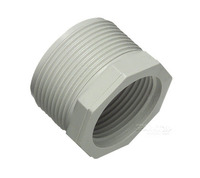
A screwed reducer connects two sections of threaded conduit with different diameters. It allows a clean size transition without improvised adapters or workarounds. The fitting uses threaded male and female ends, which produces a mechanically secure, vibration-resistant joint between conduit runs. Without a screwed reducer, transitioning between conduit sizes would force non-compliant connections that compromise both cable protection and overall installation integrity.
Screwed reducers use threaded connections on both ends, which suits rigid threaded conduit systems. Plain reducers use smooth push-fit or solvent-weld connections suited to plain conduit. The threaded joint provides greater pull-out resistance and is preferred where vibration or mechanical stress is a factor. Choosing between screwed and plain depends entirely on the conduit type already installed. Mixing connection types is not recommended and may not comply with AS/NZS 2053.
Conduit fittings cover couplings, solid elbows, junction boxes, locknuts, and reducers. Each serves a distinct function. Screwed reducers are classified as transition fittings, designed for size changes rather than direction changes or terminations. They appear regularly in multi-circuit installations where conduit runs change diameter between distribution boards and outlet points.
The most widely used sizes in Australian electrical installations are 20mm to 16mm, 25mm to 20mm, and 32mm to 25mm. These match the standard nominal diameters of medium duty rigid conduit and heavy duty rigid conduit used on Australian sites. Brands such as Clipsal and NLS manufacture the full size range, with products like the Clipsal 264/1SM-GY (20mm-16mm), 264/2SMGY (25mm-20mm), and 264/3SM-GY (32mm-25mm) representing the industry standard.
Size selection must match the nominal diameter of both the larger and smaller conduit in the run. Using an incorrectly sized reducer risks a loose fit, threading damage, or a non-compliant installation.
A screwed reducer is described by its larger (male) end first and its smaller (female) end second. For example, a 25mm to 20mm reducer steps down from a 25mm conduit to a 20mm conduit. The male end threads into the female socket of the larger conduit fitting. The female end receives the male thread of the smaller conduit. Correct orientation is critical during installation. Reversing the fitting prevents proper thread engagement and may create an unsafe cable pathway.
Some installations require a transition not only in conduit size but also in conduit type. Plain to screwed combination reducers such as the Clipsal 222/2M-GY address this by providing a plain male end and a screwed female end in a single fitting. These combination products are used where a plain conduit run meets a screwed conduit run of a smaller diameter, eliminating the need for two separate fittings. Specifying the correct combination type requires confirming both the connection style and the nominal diameter at each end of the transition point.
| Size combination | Clipsal example | NLS example | Typical use |
|---|---|---|---|
| 20mm to 16mm | 264/1SM-GY | NLS 30125 | Domestic circuit branches |
| 25mm to 20mm | 264/2SMGY | NLS 30126 | Most common residential transition |
| 32mm to 25mm | 264/3SM-GY | NLS 30467 | Sub-board or commercial branch |
PVC (polyvinyl chloride) is the standard material for electrical conduit fittings in Australia. It offers reliable electrical insulation, resistance to corrosion, and compliance with AS/NZS 2053 requirements. PVC screwed reducers are lightweight, easy to handle on site, and compatible with both solvent-weld and threaded assembly methods depending on the fitting design. The material resists moisture, common chemicals, and UV degradation. This makes it suitable for residential, commercial, and light industrial environments.
Grey is the standard colour for PVC electrical conduit fittings in Australia, including screwed reducers. Grey indicates the fitting is intended for electrical wiring protection. Orange conduit and fittings are used for underground electrical services to signal the presence of cables during excavation. Screwed reducers in orange are specified for underground conduit runs. Using the correct colour is not merely a convention. It is a site safety and compliance requirement under Australian wiring rules and the relevant AS/NZS standards.
Quality PVC screwed reducers are manufactured to withstand the mechanical stresses of normal installation and in-service conditions, as required by AS/NZS 2053.1. PVC maintains its dimensional stability across the temperature ranges typical of Australian electrical work. This ensures thread integrity and a reliable seal over the life of the installation. Fittings from established brands such as Clipsal and NLS are tested to confirm compliance with the relevant Australian and New Zealand standards.
In domestic wiring, screwed reducers are commonly used where conduit runs transition from a larger diameter near the switchboard to smaller diameter runs feeding individual circuits or outlets. They are standard fittings in surface-mounted conduit systems used in garages, sheds, and utility areas. In these areas, threaded rigid conduit provides mechanical protection for exposed wiring. Residential applications typically use smaller size combinations such as 20mm to 16mm or 25mm to 20mm. These match the conduit sizes used for standard domestic circuit wiring.
In commercial buildings, screwed reducers appear in conduit distribution systems where main trunk conduit branches into smaller runs serving individual tenancies, floors, or equipment. Light industrial installations, including manufacturing facilities and warehouses, use screwed reducers in conduit systems that protect wiring to machinery, control panels, and lighting circuits. The threaded connection is preferred in industrial environments because it offers superior resistance to vibration and pull-out forces compared with plain conduit fittings.
Standard grey PVC screwed reducers are appropriate for indoor and sheltered outdoor installations. They should not be subject to prolonged direct UV exposure or immersion. For exposed outdoor installations, confirming the UV resistance rating of the specific product is recommended. Extended UV exposure can degrade standard PVC over time. Underground conduit systems require orange-coded fittings and conduit in compliance with Australian wiring rules. Standard grey screwed reducers are not appropriate for direct burial.
AS/NZS 2053, titled "Conduits and Fittings for Electrical Installations," is the joint Australian and New Zealand standard that sets requirements for the construction, dimensions, and performance of conduit fittings, including screwed reducers. The standard is developed by Standards Australia and Standards New Zealand. It provides a harmonised compliance framework across both countries. Compliance with AS/NZS 2053 ensures that fittings meet minimum requirements for mechanical strength, dimensional accuracy, electrical insulation, and resistance to environmental stresses.
AS/NZS 3000:2018, the Australian and New Zealand Wiring Rules, governs the installation of electrical systems. It references conduit and fitting requirements as part of the broader wiring framework. The Wiring Rules require that conduit fittings used in electrical installations provide reliable mechanical protection for the cables they enclose. They must withstand stresses arising from normal installation and service conditions. Selecting screwed reducers from compliant manufacturers ensures the installed conduit system meets the requirements of both AS/NZS 2053 and AS/NZS 3000 as a complete assembly.
Compliant screwed reducers are manufactured to nominal dimensions that ensure reliable thread engagement and dimensional consistency with mating conduit and fittings produced under the same standard. Products from established brands such as Clipsal and NLS are manufactured and tested to meet AS/NZS requirements. This reduces the risk of non-compliant installations or fitting failures. Specifying non-compliant or uncertified fittings creates liability risk for electricians. It may also result in failed inspections, required rework, or safety hazards in the completed installation.
Compliance reminder: Both the conduit and the fitting must meet AS/NZS 2053 for the joint to be compliant. Mixing certified and uncertified components in a single run may invalidate compliance for the entire run.
The first parameter is the nominal diameter of the larger conduit in the run. This determines the male (larger) end size of the reducer. The second parameter is the nominal diameter of the smaller conduit. This determines the female (smaller) end size of the reducer. The third parameter is the connection type at each end. Confirm both conduit ends use threaded connections before specifying a screwed reducer rather than a plain or combination fitting.
Dimensional compatibility between fittings and conduit from different manufacturers is governed by AS/NZS 2053. Compliant products from different brands should be interchangeable in theory. In practice, specifying fittings from the same brand as the installed conduit system eliminates potential tolerance stack-up issues. It also simplifies procurement. Clipsal and NLS are the two most widely stocked screwed reducer brands in the Australian electrical wholesale market. They are the default choice for most site applications.
Screwed reducers are sold individually. This allows precise quantity ordering based on the number of size transition points in the conduit layout. For larger projects, reviewing the conduit drawings and counting each transition point before procurement prevents under-ordering and avoids site delays. Ordering a small quantity of spares (typically 10%) is standard practice on commercial and industrial projects. The buffer accounts for installation damage or measurement errors.
Conduit ends must be cleanly cut and deburred before threading. This ensures full thread engagement and prevents damage to cable insulation during cable pulling. Use a dedicated PVC pipe cutter for clean square ends. Thread condition on both the conduit and the reducer should be inspected before assembly. Damaged or cross-threaded connections will not provide a mechanically secure joint and must be replaced. For PVC conduit systems, confirming the conduit thread form matches the reducer thread form prevents assembly issues. AS/NZS 2053 standardises thread forms to ensure compatibility across compliant products.
Screwed reducers should be hand-tightened first to confirm correct thread engagement. Apply a strap wrench or conduit pliers for final tightening. Over-tightening PVC threaded fittings risks cracking the fitting or stripping the thread. The correct torque is firm hand-tight plus approximately one additional quarter turn with a tool. Once assembled, check the joint for alignment with the conduit run. Lateral stress on the fitting can cause cracking or thread disengagement over time. Where a sealed joint is required, follow the manufacturer's recommendation for thread sealant or solvent cement compatible with PVC.
Screwed reducers must be installed so the internal bore of the fitting does not create a restriction or sharp edge. Either condition could damage cable insulation during cable pulling. The completed conduit run, including all fittings, must be inspected to confirm that the cable pathway is continuous, secure, and free of obstructions before cables are drawn through. All fittings, including screwed reducers, must remain accessible for inspection or maintenance where required by the installation design and applicable wiring rules. Conduit saddles support the run on either side of the reducer to prevent stress on the joint.
Clipsal is the most widely recognised brand in the Australian electrical fittings market. Clipsal screwed reducers are manufactured to AS/NZS standards and stocked through electrical wholesalers nationally. The Clipsal 264 series covers the full range of size combinations from 20mm-16mm through to 32mm-25mm. This provides a consistent product family for multi-size conduit installations. Clipsal's market presence and long supply chain history mean replacement fittings and additional quantities are reliably available from most Australian electrical wholesale suppliers.
NLS (National Light Sources) manufactures screwed reducers such as the NLS 30126 (25mm-20mm solid screwed reducer) and NLS 30467 (32mm-25mm) as cost-competitive alternatives to Clipsal for price-sensitive projects. NLS products are stocked by specialist electrical wholesalers. They are manufactured to meet the same AS/NZS standards as premium-brand equivalents, making them a compliant choice for most applications. For high-volume projects where unit cost matters, NLS screwed reducers offer a practical way to reduce materials cost without compromising compliance or performance.
Online electrical wholesalers provide access to the full range of screwed reducer sizes and brands with Australia-wide delivery. This makes them a practical procurement channel for electricians working across multiple sites. Key considerations when buying online include confirming the correct size combination, checking that the product is AS/NZS compliant, and reviewing delivery timeframes against project schedules. Purchasing from a specialist electrical wholesaler rather than a general hardware retailer ensures access to trade-grade products, accurate technical specifications, and reliable stock availability.
Club Clipsal is Australia's largest electrician community offering trade rewards, business support, and exclusive benefits. When you nominate Sparky Direct as your preferred wholesaler, we automatically apply your Clipsal spend points to your Club Clipsal account daily.
Entry-level offering coaching, mentoring, and training discounts
Unlock exclusive industry tools and networking events
Access Toyota fleet offers and business software discounts
Maximum benefits, including VIP experiences and rewards
1. Sign Up: Create your Club Clipsal account at clipsal.com/club-clipsal or via the iCat mobile app
2. Nominate Sparky Direct: Select Sparky Direct from the wholesaler dropdown menu in your profile
3. Add Email: Enter your Sparky Direct account email address in the membership number field
4. Start Earning: Every dollar spent on Clipsal products earns points automatically
Redeem points from the rewards store, including gift cards, tools, and experiences. Access business summits, product training, and industry networking events. Receive early access to new product launches and special promotions. Connect with fellow electricians via the Club Clipsal community app.
Watch NLS 30467 | Solid Screwed Reducer 32-25mm video
Watch NLS 30126 | Solid Screwed Reducer 25-20mm video
Watch Clipsal 263-25-GY | 25mm Plain to Screwed PVC Conduit Male Coupling video

These coupling just work. I go through hundreds a week on air conditioning drains. They are strong and fit snug. Also the delivery to Sydney was fast. Cheers
This is a very compact tee and great if space is limited and looks so much better than the bulk inspection tees. Wires are easy to pass through the branch section, however consideration must be given to wire qty and sizing along with the number of through wires due to the minimal area for the radial turn of the branch wire. This tee was perfect for my job and I had no problem using it at all
Needed some single entry 20mm Junction boxes for a renovation wiring project. Not use to buying small amounts of electrical fittings. Sparky Direct made it easier and simpler, at a competitive cost. Good price, and a varied range of fittings via a prompt post made it easier to finish my project.
Quality products in stock • Fast Australia-wide delivery • Competitive trade pricing
Browse Screwed Reducers → Get Expert Advice →Yes, they provide a clean and professional transition between different conduit sizes.
Sparky Direct supplies screwed reducers from brands such as Clipsal and NLS Australia-wide, offering reliable conduit size transition solutions with convenient delivery.
Screwed reducers are securely packaged and delivered via standard courier services.
Unused products are generally eligible for return according to the seller’s returns policy.
Warranty coverage varies by manufacturer and typically covers defects in materials or workmanship.
Yes, screwed reducers are typically sold as individual conduit fittings.
Yes, selecting the correct size ensures a secure fit and compliant installation.
Once installed correctly, they generally require no maintenance.
Yes, they are commonly used when modifying or extending existing conduit systems.
They may be visible in surface-mounted conduit or concealed within walls or enclosures.
Quality screwed reducers are designed to withstand everyday installation conditions.
Yes, they help maintain conduit continuity and cable protection.
They are straightforward for trained professionals to install as part of a compliant system.
Screwed reducers are conduit fittings used to connect two different conduit sizes using threaded (screwed) connections.
Yes, they are a standard fitting when transitioning between threaded conduit sizes.
They allow a threaded connection where screwed conduit fittings are required.
Yes, they are designed to create a firm and reliable threaded connection between conduit sizes.
Yes, they are suitable for residential, commercial, and light industrial applications.
Yes, they are commonly used in indoor electrical conduit systems.
Yes, they are available in the following size combinations:
They are typically made from durable PVC or similar materials suitable for electrical installations.
Screwed reducers are commonly available from trusted brands such as Clipsal and NLS.
Yes, they are designed for use with rigid, threaded electrical conduit.
Quality screwed reducers are manufactured to meet relevant AS/NZS electrical and safety standards when installed correctly.
They are used to transition from a larger threaded conduit size to a smaller threaded conduit size within a conduit system.