Search Results:
Search Results:
Search Results:
Search Results:

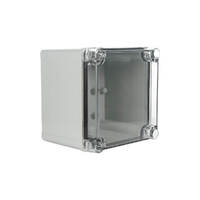
Find the best surface mount enclosures here at Sparky Direct. [ Read More ]
A surface-mount enclosure is a sealed box fixed onto a wall, post, or panel. It houses electrical components such as circuit breakers, residual current devices, busbars, and terminations. The enclosure provides mechanical protection, safe isolation of live parts, and a defined access point for maintenance.
Most surface mount enclosures use a hinged or removable lid, internal DIN rails for modular devices, and pre-marked knockouts for cable entries. The body sits proud of the wall, with mounting feet or fixing holes pressed into the back panel.
Common applications include garages, sheds, workshops, granny flats, plant rooms, factories, and outdoor switchboards. They also suit retrofits where opening a finished wall is impractical. Three-phase sites often use them for sub-boards downstream of the main three-phase meter box.
Surface-mount enclosures are quicker to install. There is no wall cavity to cut, no patch-and-paint after the box goes in, and no need to negotiate framing or insulation. For an existing home where capacity has been outgrown, fitting a sub-board on a garage wall takes hours rather than days.
Service work is straightforward when the enclosure projects from the wall. Cable entries can be added through the side or top knockouts. Replacing or adding modules on the DIN rail does not disturb wall finishes. When a home expands and adds solar, EV charging, or a hot water circuit, surface-mount sub-boards make the upgrade cleaner.
The enclosure isolates live parts from accidental contact, dust, and moisture. Sealed plastic models with gasket lids resist splashing water and airborne particulates. Metal enclosures add impact protection for plant rooms and industrial sites. Internal devices stay rated and safe across the design life of the installation.
Steel enclosures suit factories, plant rooms, and industrial sites. They resist impact, fire, and physical abuse better than plastic. Powder-coated finishes resist corrosion in dry environments. Stainless and zinc-plated variants extend service life in damp conditions. Metal boxes also provide a continuous earth path when properly bonded.
Polycarbonate and ABS plastic enclosures dominate residential and light commercial use. They are lightweight, electrically insulating, and immune to rust. UV-stabilised polycarbonate handles outdoor exposure without yellowing or cracking. Plastic also accepts knockouts cleanly and seats glands without thread damage.
Metal wins on impact and fire resistance. Plastic wins on corrosion resistance, weight, and cost. For a residential garage sub-board, plastic is usually the right call. For a factory floor or coastal industrial site, the choice depends on the corrosion risk against the impact risk. Many sites mix the two: metal for the main switchboard, plastic for outdoor and downstream sub-boards.
An IP rating describes how well an enclosure resists solids and liquids. The first digit covers solids (0 to 6), the second covers liquids (0 to 9). IP54 means dust-protected and splash-resistant. IP66 means dust-tight and protected against powerful water jets. The higher the rating, the better the seal and the more demanding the gasket and lid clamping system.
Indoor sub-boards in dry rooms can use IP40 enclosures, which exclude small objects but offer no water protection. Outdoor and wet-area enclosures should be IP54 minimum, with IP66 preferred for direct exposure. Coastal sites benefit from IP66 with a corrosion-resistant body.
IK ratings cover impact resistance separately. IK08 and IK10 enclosures handle workshop and public-access locations. Combine the IP and IK ratings to suit the site: IP66 IK10 for outdoor public-facing installations, IP54 IK08 for sheltered residential boards.
Single-door enclosures suit standard residential and light commercial loads up to roughly 24 modules. Multi-door designs separate metering, control, and outgoing circuits into different compartments. They suit larger installations where utilities and tenants need separate access.
Wall-mounted boxes are fixed-size single units. Modular systems use stackable or expandable bodies that grow with the installation. For sites planning future solar, battery, or EV expansion, a modular distribution board reduces the cost of later upgrades.
Lockable enclosures suit common areas, schools, and rented sites where unauthorised access is a risk. Gasketed lids hold the IP rating across years of opening and closing. Sealed knockouts and glanded cable entries complete the protective envelope. The gasket and the cable entry method together determine the as-installed IP rating, not the body alone.
Match the enclosure to the load and the environment. A garage sub-board in a coastal home wants IP54 polycarbonate. A factory floor needs steel with IK10. A retail tenant fitout wants a flush plastic distribution board with clear labelling and lockable access. Get the application right first, then size the body.
Count the modules required for protection: each MCB takes one pole, each RCBO takes one or two, depending on type, and surge protection devices take additional poles. Add main switch poles. Allow at least 20 percent spare capacity. A 12-module residential board running at full capacity from day one will hit its limit within a few years.
Solar inverters, battery storage, EV chargers, and heat pumps all add circuits. A board sized only for the current load will need replacement within five years on most homes. Going one size up at first fit is cheaper than swapping the enclosure later.
Surface mount sits on the wall; recessed sits inside the wall. Surface is faster to install, easier to service, and easier to expand. Recessed is flush, less visible, and tidier in finished spaces. Surface mount suits trades and pragmatic installs. Recessed suits architect-led residential and high-end commercial fitouts.
| Factor | Surface Mount | Recessed |
|---|---|---|
| Installation time | Faster, no wall cavity | Slower, requires chasing |
| Wall finish required | None after fixing | Plaster and paint repair |
| Visibility | Box projects from wall | Door flush with wall |
| Service access | Direct, all sides | Front access only |
| Best for | Retrofits, garages, outdoor | New build, finished interiors |
Choose surface mount for retrofits, garage and shed installations, outdoor switchboards, and any site where wall opening is impractical. It is also the better choice when future expansion is likely, because adding cable entries and modules is straightforward.
Renovations almost always favour surface mount. The wall is already finished, and cutting it open creates dust, debris, and rectification work. New builds can go either way, though many electricians still prefer surface mount in garages, plant rooms, and external locations, even on greenfield sites.
Tidy wiring is safer wiring. Group cables by circuit, keep neutrals adjacent to their corresponding actives, and use cable ties or trunking to route wires away from active terminals. Internal cable management accessories keep faultfinding fast and reduce the risk of damage during future modifications.
MCBs, RCBOs, and contactors generate heat. Crowded enclosures trap that heat and can derate the protection devices. Allow space above the DIN rail for air circulation. For high-density boards, vented enclosures or fan-assisted models maintain ambient temperature inside the body.
Live terminals must be shielded behind a finger-safe escutcheon. Spare ways should be blanked off. Labels should identify every circuit. The board should be accessible without moving stored items: a switchboard buried behind shelving is a switchboard nobody can reach in a fault.
All fixed wiring installations in Australia must comply with AS/NZS 3000:2018, the Wiring Rules. Enclosures used in switchboards must meet AS/NZS 61439 for low-voltage switchgear assemblies. IP and IK ratings are defined under AS 60529 and AS 62262, respectively. The selected enclosure must carry a compliance marking visible on the body or inside the door.
Installation, alteration, and repair of fixed electrical work in Australia requires a licensed electrician. Surface mount enclosures forming part of a switchboard or sub-board fall under this requirement. DIY work on switchboards is not legal in any Australian state or territory and voids both insurance and product warranties.
Mount the enclosure on a solid backing: brick, masonry, structural framing, or a properly fixed mounting board. Use fixings rated for the substrate. Allow clear working space in front of the door per AS/NZS 3000. For outdoor sites, position the enclosure away from sprinkler spray and standing water.
Compliance reminder: Switchboard work in Australia must be carried out by a licensed electrical contractor. Confirm the licence holder's number on the certificate of electrical safety supplied at handover.
Sparky Direct stocks surface mount enclosures from Clipsal, Hager, Legrand, NLS, GEN3, and Connected Switchgear, with delivery Australia-wide. Online wholesale buying lets electricians compare specs, price points, and availability across brands without driving between branches.
Cheap enclosures often save money on hinges, gaskets, and DIN rail mounts. The body looks similar, but the sealing surfaces drift after a few open-close cycles. Trade-grade enclosures from established manufacturers hold their IP rating across years of service and accept third-party DIN-rail components without fitment issues.
Check the IP and IK rating against the installation environment. Confirm the module count covers the load plus 20 percent spare. Verify the body material suits the environment: polycarbonate for outdoor, steel for industrial, ABS for indoor residential. Confirm cable entry options match the installation method, whether knockouts, glands, or top-entry.
Premium enclosures from Clipsal MAX9, Hager, and Legrand carry tighter manufacturing tolerances and longer warranty terms. Budget enclosures still meet Australian Standards, but the build quality of hinges, gaskets, and locks varies. For a board that will see weekly access, premium pays back over the life of the install.
Look at the gasket compression: a quality gasket holds shape after dozens of close cycles. Look at the hinges: stainless or steel pins outlast plastic snap fittings. Look at the DIN rail: zinc-plated steel beats stamped sheet metal that flexes when modules are added. CBI-electric and 4Cabling sit alongside the premium names for specific industrial and data applications.
Warranty terms vary by brand and model: confirm the specific product page for current cover. Established brands provide replacement parts and accessories years after the original purchase. Budget brands often discontinue model lines, leaving service work to source third-party gaskets and rails.
Schedule periodic visual inspection of the enclosure: door seal condition, evidence of moisture or dust ingress, signs of overheating around terminals. A licensed electrician should carry out testing under AS/NZS 3000 at the intervals appropriate to the installation type.
Keep cable entries sealed: open knockouts allow ingress that defeats the body rating. Replace damaged gaskets promptly. For coastal sites, inspect for early signs of corrosion at fixings and hinges. A small fault caught early avoids a larger remedial job.
Replace the enclosure when the body cracks, the gasket fails, the DIN rail rusts, or the load grows past the module count. Adding solar, batteries, or EV charging usually triggers a board replacement; budgeting for a larger box at first fit avoids the second install.
The most common installation issue is undersizing. A board with no spare ways forces compromises: stacking RCBOs on the same circuit, omitting surge protection, or skipping correctly rated mains switches. The fix is ordering the correct size at the start, not retrofitting around a too-small body.
Water inside an outdoor board points to a failed gasket, an unsealed cable entry, or a body crack. Dust inside an indoor board points to missing knockout blanks or a poor wall seal at the back. Neither is acceptable: address the entry path first, then dry, clean, and inspect the components inside.
Enclosures mounted too low, too high, or behind storage are unsafe and breach AS/NZS 3000. The board must be reachable without ladders or moved obstacles. If the original location is wrong, relocating is the correct response, even if it means re-running circuits.
Club Clipsal is Australia's largest electrician community offering trade rewards, business support, and exclusive benefits. When you nominate Sparky Direct as your preferred wholesaler, we automatically apply your Clipsal spend points to your Club Clipsal account daily.
Entry-level offering coaching, mentoring, and training discounts
Unlock exclusive industry tools and networking events
Access Toyota fleet offers and business software discounts
Maximum benefits, including VIP experiences and rewards
1. Sign Up: Create your Club Clipsal account at clipsal.com/club-clipsal or via the iCat mobile app
2. Nominate Sparky Direct: Select Sparky Direct from the wholesaler dropdown menu in your profile
3. Add Email: Enter your Sparky Direct account email address in the membership number field
4. Start Earning: Every dollar spent on Clipsal products earns points automatically
Redeem points from the rewards store, including gift cards, tools, and experiences. Access business summits, product training, and industry networking events. Receive early access to new product launches and special promotions. Connect with fellow electricians via the Club Clipsal community app.
Watch Legrand 601974 4 Module Surface Mount Weatherproof Switch Board IP65 IK09 video
Watch NLS 30297 12 Pole Surface Mount Weatherproof Switch Board IP54 video
Watch NLS 30301 8 Pole Surface Mount Weatherproof Switch Board IP54 Rated video

Traditional format enclosure but modern layout, without being fussy. The case and the blocks have a higher current spec than most similar enclosures. Good internal space particularly above the rail. Size is unique, being 11u it fits in smaller spaces than 12u options. Feels solid.
Having tried other enclosures which leaked I looked to Sparky for an IP66 initial. The unit has the necessary hardware for easy use. The din rail has only a small space to run wiring behind it so careful planning is necessary. Else, the quality is good and the price is OK. So far there has been no water ingress.
My electrician has been looking everywhere for this item. Very easy to purchase from this company. I did not have to put up with: I can't sell to you unless you have an electrical license like I have had with other companies. Information on the website made it very easy for me to purchase the correct item(s) I required.
Quality products in stock • Fast Australia-wide delivery • Competitive trade pricing
Browse Surface Mount Enclosures → Get Expert Advice →Yes, they simplify installation in solid walls, concrete, or retrofit projects.
Sparky Direct supplies surface mount enclosures Australia-wide, offering practical electrical housing solutions with convenient delivery.
Surface mount enclosures are securely packaged and delivered via standard courier services.
Unused products are generally eligible for return according to the seller’s returns policy.
Warranty coverage varies by manufacturer and typically covers defects in materials or workmanship.
Yes, surface mount enclosures are typically sold as individual units.
Yes, choosing the correct size ensures enough space for wiring and components.
Quality enclosures are designed to withstand everyday use and installation conditions.
Yes, they protect components from accidental contact and environmental factors.
Yes, they are commonly used in renovation and retrofit work.
Modern designs provide a clean and functional appearance.
Yes, they are mounted on the surface and remain visible.
Yes, they help organise and protect wiring in a tidy enclosure.
A surface mount enclosure is an electrical housing designed to be mounted directly onto a wall or surface to contain electrical components or connections.
Yes, they are a standard solution where flush mounting is not practical.
They allow electrical equipment to be installed without cutting into walls or structures.
Yes, they are widely used in commercial and light industrial installations.
Yes, they are commonly used in residential electrical projects.
Some models are suitable for outdoor use when appropriately rated and weather resistant.
Yes, many are designed for indoor installations.
Yes, they are available in a wide range of sizes to suit different components and wiring needs.
They are commonly made from durable plastic or metal depending on the application and environment.
Yes, they are designed specifically to safely contain electrical wiring and devices.
Quality surface mount enclosures are manufactured to meet relevant AS/NZS electrical and safety standards when installed correctly.
They are used to house switches, outlets, junctions, control equipment, or communication components where recessed mounting is not possible.