

EV Charger
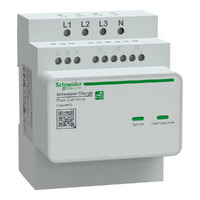
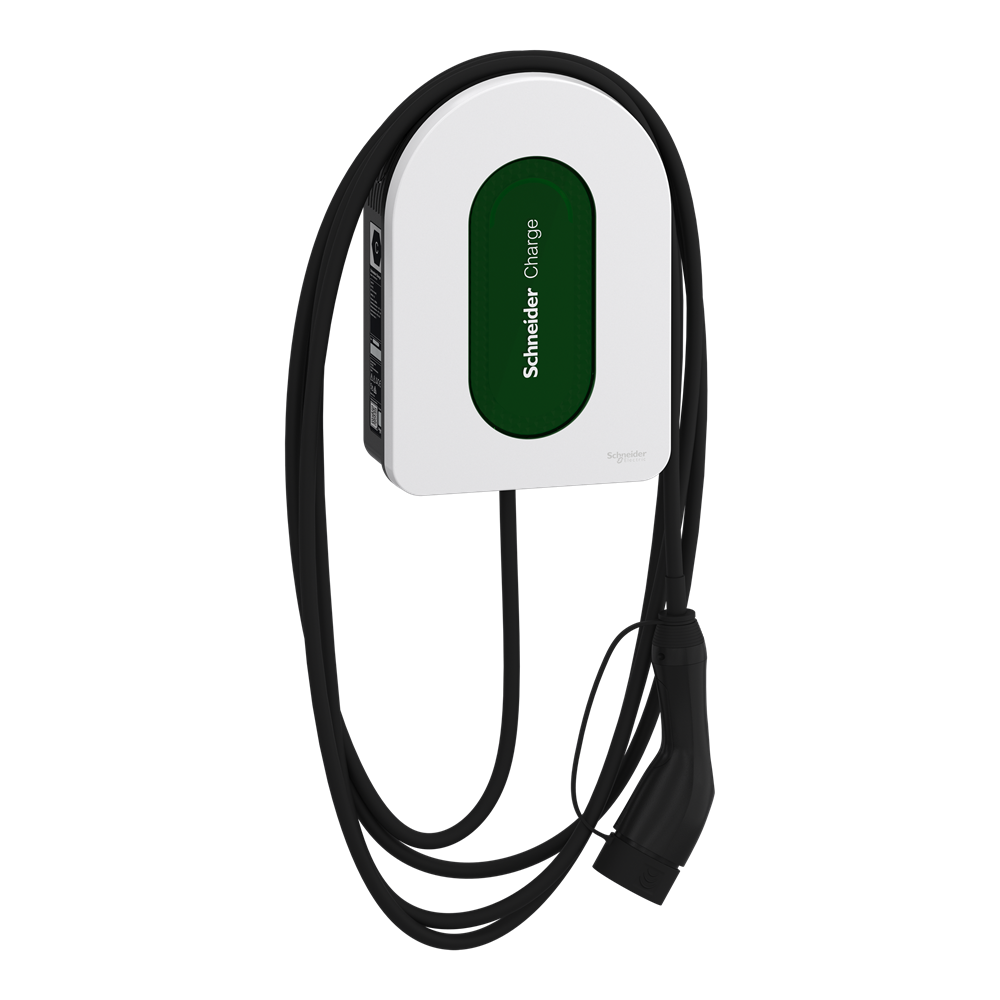
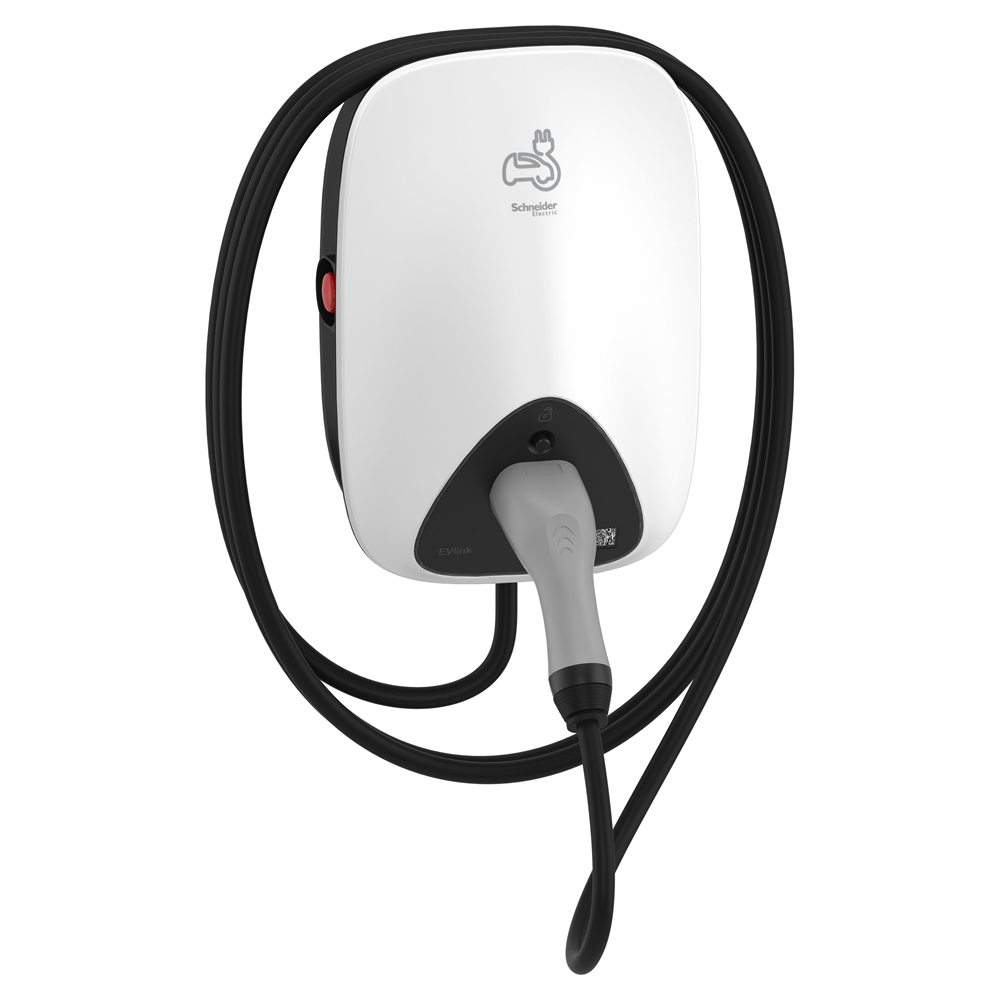
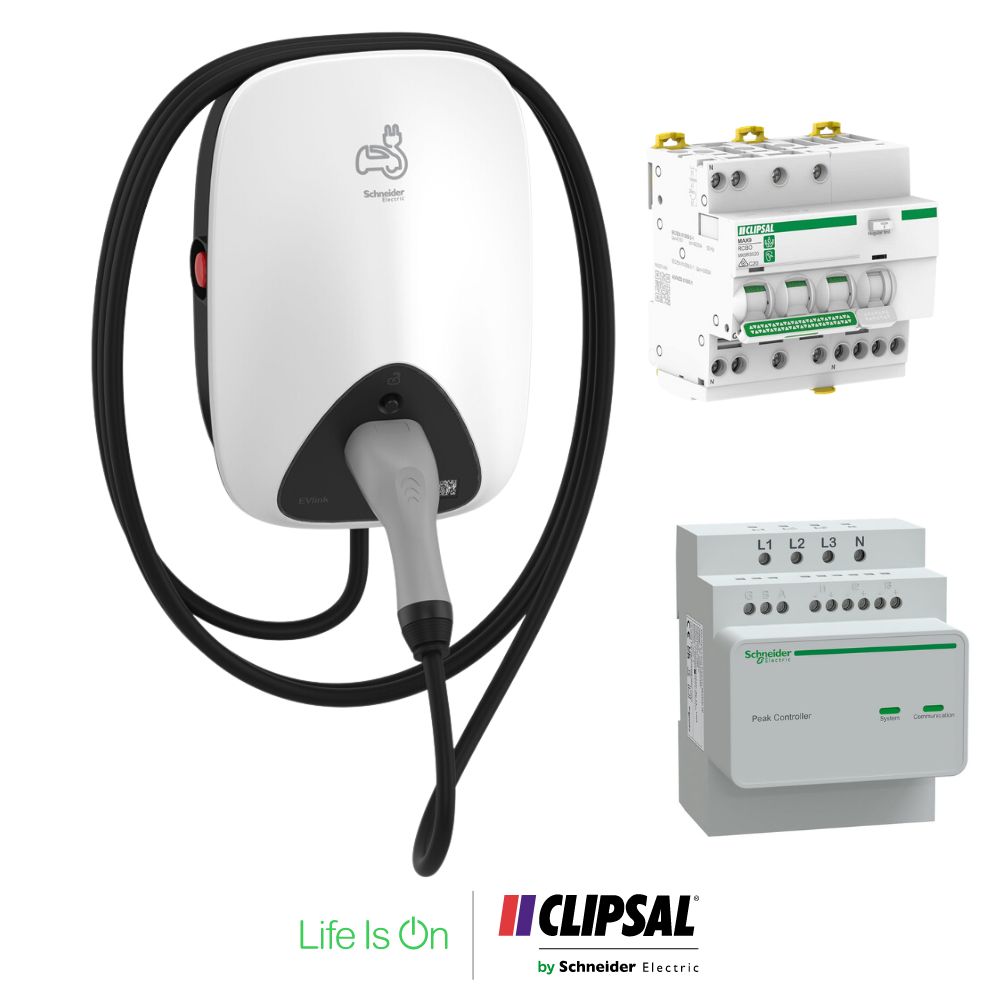
EVA2HPC1 | Schneider Charge | 1 Phase | Anti-tripping | Universal Peak Controller
$397.97
$361.79 ex. GST
Search Results:
Search Results:
Find the best EVlink electric car charging stations & accessories here at Sparky Direct [ Read More ]
An electric car charging station is a fixed appliance that delivers controlled AC or DC power from the building supply to the vehicle's onboard charger or battery. EVlink units handle the safety interlocks, current regulation, and communication that a standard power outlet cannot provide.
EVlink is the EV charging brand from Schneider Electric, sold in Australia through licensed wholesalers. The range sits alongside Schneider's broader switchgear and energy management products, which means the chargers are designed to integrate with Acti9 protection devices, Resi9 enclosures, and PowerLogic metering on the same switchboard.
A charging station is a hardwired piece of equipment that supplies energy to an EV via a captive cable or socket. It includes residual current detection, contactor control, vehicle handshaking through the IEC 61851 protocol, and in most cases user authentication. A general-purpose 10A power point is not a charging station and is not designed for repeated, sustained vehicle charging loads.
A residential EVlink unit connects to a dedicated circuit on the home switchboard. When the vehicle is plugged in, the charger and car negotiate the available current. The charger then closes its internal contactor and supplies AC power to the car's onboard rectifier, which converts it to DC for the battery. Built-in DC leakage detection (Type B or A-EV) protects the installation in line with AS/NZS 3000:2018 requirements for EV charging circuits.
A wall socket has no current management, no DC leakage protection, and no communication with the vehicle. Charging speed is capped at around 2.4kW on a standard 10A outlet, and continuous loads at this rating place stress on the wiring and the outlet itself. A purpose-built EVlink station delivers up to 7.4kW single-phase or 22kW three-phase, with full safety supervision.
EV charging is grouped into three levels based on power output, voltage, and the type of supply.
Single-phase supply is standard in most Australian houses and limits AC charging to 7.4kW. Three-phase supply, common in newer homes and most commercial sites, allows AC charging up to 22kW. Before selecting a charger, the electrician confirms the supply type at the meter and checks the available capacity on the main switch.
The car's onboard charger sets the actual AC charging speed. A vehicle limited to 7.4kW onboard will not charge faster on a 22kW unit, even though the station can supply more power. DC charging speed depends on the car's battery state of charge and pack temperature, so the headline kilowatt rating is the peak, not the sustained average.
The EVlink range is grouped into three product families covering residential, commercial AC, and DC fast charging applications.
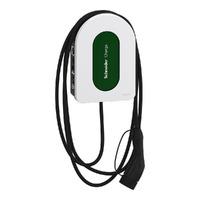
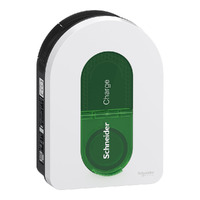
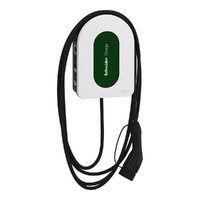
The home range includes the EVlink Wallbox and the newer Schneider Charge wall-mounted unit. Both are sized for single-phase or three-phase home supply, with current ratings up to 32A. Tethered cable and socket-only versions are available depending on the install layout.
EVlink Pro AC units are built for workplaces, fleet depots, hotels, and public car parks. They support OCPP back-end integration, RFID user authentication, and load sharing across multiple chargers. Wall and pedestal mounting options allow flexible site layouts.
The Pro DC range covers fast charging from 24kW up to 180kW. These units are deployed by charge point operators, fleet managers, and forecourt site owners. Installation involves three-phase commercial supply, civil works, and a network back-end agreement.
The EVlink Universal Peak Controller sits at the supply intake and dynamically reduces charger output when the building approaches its peak demand limit. This avoids the cost of upgrading the main supply when adding chargers to an existing site.
Most EVlink Pro units speak OCPP 1.6 or 2.0.1, the open protocol that lets a charge point operator manage the unit through their preferred back-end software. This avoids vendor lock-in. Home models offer Wi-Fi or Bluetooth pairing with a mobile app for scheduling, charge history, and remote start.
Dynamic load management balances charger output against the rest of the building's demand. On a multi-charger site, the supply is shared intelligently so that no charger is starved and the main breaker never trips. Static load limits can also be set per charger when supply capacity is fixed.
EVlink units carry IP ratings appropriate for outdoor wall installation in Australian conditions, including direct rainfall and dust exposure. IK ratings indicate impact resistance, which matters in car park installations where bollard protection is recommended. Specific IP and IK ratings vary by model, so check the datasheet for each unit before quoting an outdoor install.
Type 2 (Mennekes) is the AC connector standard for new EVs sold in Australia. CCS2 is the DC fast charging standard, combining the Type 2 AC pins with two additional DC pins. EVlink AC chargers use Type 2 sockets or tethered Type 2 cables. EVlink Pro DC units use CCS2 plus optional CHAdeMO for older Japanese vehicles.
Wall mounting is the default for residential and tight commercial installations. Pedestal mounting is preferred where there is no suitable wall, for double-sided installations serving two bays, or where the charger needs to sit clear of vehicle bumpers. Both options use the same charger module.
Commercial chargers connect to the back-end through Ethernet, Wi-Fi, or 4G modem. Sites without reliable internet can specify a 4G option, which is also a useful fallback for primary connections.
Untethered chargers benefit from cable holsters and overhead cable retractors to keep cables off the ground. For switchboard-side accessories, the install requires main switches and isolators, dedicated circuit breakers, and cable duct for the supply cable run. For surface-mounted enclosures or expansion of an existing board, see the electrical enclosures range.
For a freestanding house, a 7.4kW single-phase wall unit covers most daily driving. If three-phase is available and the vehicle supports it, a 22kW unit reduces full-charge time to a few hours. For apartments, the body corporate and the strata electrician should be consulted before specifying any unit. Common-property installations usually require load management and individual energy metering for each bay.
Workplace charging is typically 7-22kW AC, sized so vehicles top up across an 8-hour shift. The number of chargers, supply capacity, and OCPP back-end choice are the main decisions. Load management is almost always required.
Fleet sites often combine AC chargers for overnight depot charging with DC chargers for mid-shift top-ups. Public infrastructure planning involves traffic flow, accessibility standards, and a service-level agreement with the back-end operator. EVlink Pro AC and Pro DC units are commonly specified for these sites.
EVlink units carry RCM (Regulatory Compliance Mark) certification and are designed against Schneider Electric's global engineering standards. Lower-cost imports may meet the same minimum compliance requirements on paper but vary in component selection, contactor lifecycle, and after-sales support. Sparky Direct also stocks the Ohme EV chargers range as an alternative for buyers comparing options.
The main differentiator at the top end is back-end flexibility. OCPP-compliant units like the EVlink Pro range can be moved between operators or run on open-source software. Closed-ecosystem chargers tie the site to a single network provider for the life of the unit.
| Factor | Premium EVlink | Budget Imports |
|---|---|---|
| Local technical support | Australian Schneider distribution network | Often offshore or limited |
| Spare parts availability | Stocked through wholesale channels | Variable, often replacement only |
| OCPP back-end choice | Open across most Pro models | Often locked to one provider |
| Warranty handling | Manufacturer-backed in Australia | Depends on importer |
EV charging stations are fixed wiring work and must be installed by a licensed electrician. DIY installation is not permitted under state electrical safety laws. The electrician issues a Certificate of Electrical Safety (or state equivalent) when the work is complete.
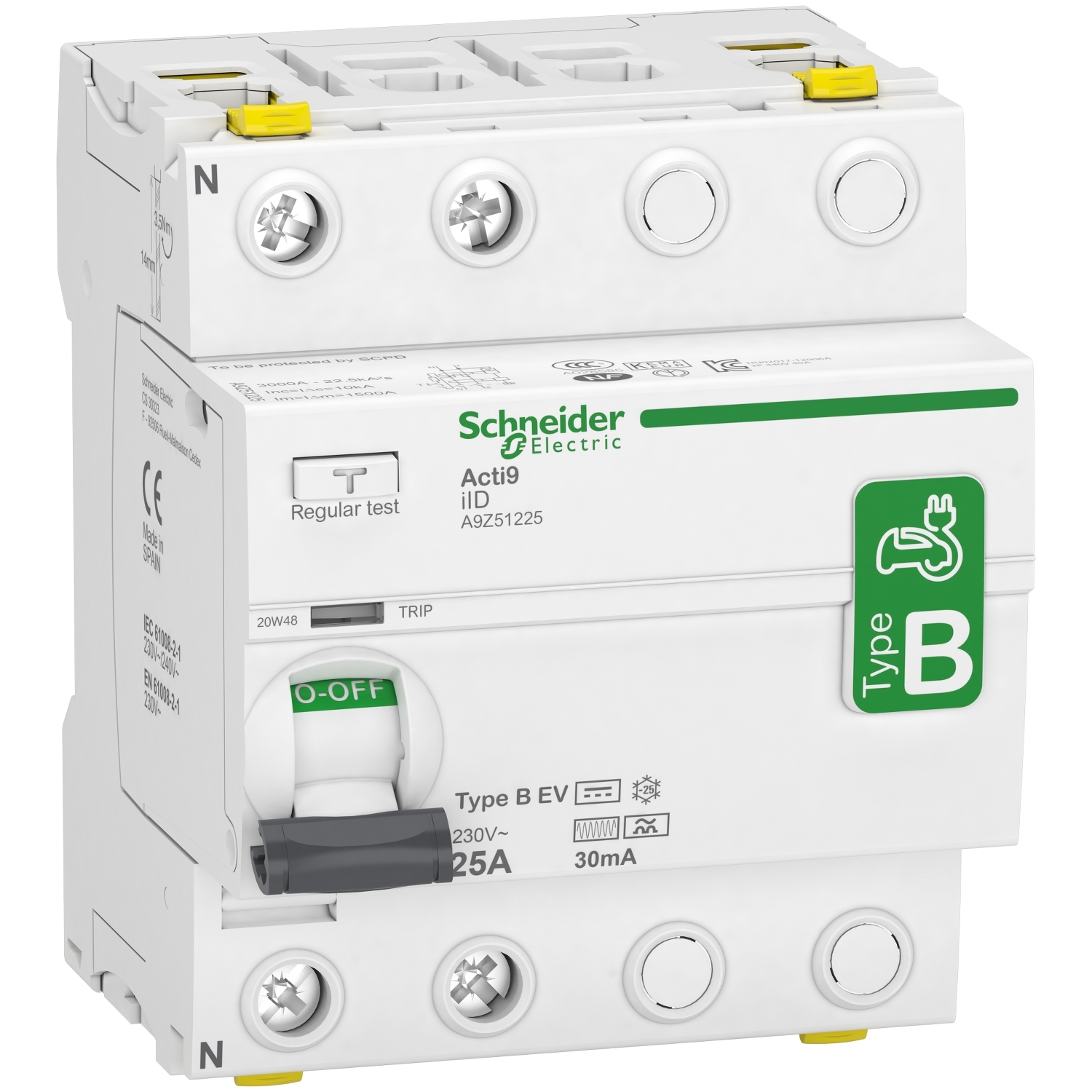
The relevant standards are AS/NZS 3000:2018 (Wiring Rules), AS/NZS 3001.2:2022 for EV charging installations, and AS/NZS 4777 for any solar-coupled supply. The wiring rules require a dedicated final subcircuit for each charging point. They also mandate RCD protection of Type A-EV or Type B (depending on the charger's internal DC leakage detection), plus approved cable type and sizing for the run.
Before installation, the electrician assesses the existing main switch rating, available spare capacity at the switchboard, and the proposed cable route. Sites near or at the main capacity may need a load controller, supply upgrade, or peak management device. Use a kilowatt hour meter to baseline existing demand if usage data is unavailable. For EV-specific switchboard protection, the RCD range and 3-phase RCBOs cover the protection devices most commonly specified.
AS/NZS 3001.2:2022 Note: EV charging installations require a dedicated final subcircuit. Sharing the circuit with other loads, including general-purpose outlets in the garage, is not compliant.
Budget chargers can look attractive on the unit price alone, but the total installed cost is usually similar once cabling, protection, and labour are added. A unit with poor support history can cost more in downtime than a premium unit saves at purchase.
Typical installation cost components include the cable run from switchboard to charger, the dedicated breaker and RCD, switchboard modifications if needed, and any civil works such as bollard installation or trenching. Sites needing a supply upgrade from single-phase to three-phase, or a service mains upsizing, will see significantly higher project costs.
Commercial ROI depends on the model. Workplace chargers funded as a staff benefit show ROI in retention and amenity rather than direct revenue. Public chargers under a paid model generate revenue per kWh dispensed, with payback driven by utilisation rates. Fleet operators see ROI through fuel cost displacement.
The most common use case is a single 7.4kW or 22kW wall unit installed in the garage or carport. Overnight charging at off-peak rates is the cheapest way to fuel an EV in Australia.
Strata installations typically use a load-managed system with billing per car space. The body corporate approves the master plan, and individual residents pay for their own energy use through the back-end. Common bay infrastructure usually involves a sub-board, dedicated metering, and provision for future expansion.
Workplace chargers are often a recruitment and retention tool. Sites with an existing solar PV system can pair chargers with daytime solar export to reduce the energy cost. Reserved bays, signage, and a clear charging policy avoid disputes between staff.
Public charging requires accessibility-compliant bay design, weatherproofing, vandal-resistant hardware, and 24/7 monitored back-end software. Operators commonly specify EVlink Pro AC for destination charging and Pro DC for highway corridors.
Pairing an EV charger with rooftop solar lets the household consume excess generation rather than exporting it to the grid at low feed-in rates. Smart chargers can throttle output to match available solar in real time. Off-peak grid charging is the next-best option overnight, particularly on tariffs with a dedicated EV plan. The solar circuit breaker and solar isolator switch ranges cover the protection devices required on the PV side of these installations.
Federal and state EV incentives change frequently. Rebates have applied at various times to vehicle purchases, home charger installation, and stamp duty exemptions. Check the current state-level program with your state government before quoting any subsidy amount to a customer.
V2G allows a parked EV to discharge stored energy back into the home or grid during peak demand. The technology is approved for limited Australian deployments under AS/NZS 4777.2:2020 amendments, with a small number of compatible vehicles. EVlink and broader Schneider energy management products are expected to support V2G as the regulatory framework matures.
Annual visual inspection of the charger enclosure, cable, and connector for wear or damage is recommended. Commercial sites typically schedule periodic functional testing of RCDs and contactor operation as part of a wider electrical maintenance contract.
Warranty terms vary by EVlink model and the conditions of installation. Schneider Electric handles in-warranty service through the Australian distribution network. Always retain the installation Certificate of Electrical Safety, since warranty claims usually require evidence of compliant installation.
Sites built with future expansion in mind, such as oversized cabling and switchboard provision for a second charger, are far cheaper to upgrade later. For fleet and commercial sites, scalability is best designed at the master planning stage.
First check is the dedicated breaker and RCD at the switchboard. If both are closed, the charger's internal indicators usually point to the fault. Repeated RCD trips indicate either a faulty RCD type for the charger (Type AC where Type A-EV or B is required), DC leakage from the vehicle, or a fault in the supply cable.
The most common cause is the vehicle's onboard charger limiting the rate, not the EVlink unit. Other causes include cold battery temperatures (DC charging slows below freezing), a current limit set in the charger's app, or load management throttling output during peak demand.
Wi-Fi-connected home units lose connection if the router is moved, the password changes, or the signal is weak at the charger location. Pro units with 4G connectivity require an active SIM with data allowance and a clear cellular signal at the install site.
Club Clipsal is Australia's largest electrician community offering trade rewards, business support, and exclusive benefits. When you nominate Sparky Direct as your preferred wholesaler, we automatically apply your Clipsal spend points to your Club Clipsal account daily.
Entry-level offering coaching, mentoring, and training discounts
Unlock exclusive industry tools and networking events
Access Toyota fleet offers and business software discounts
Maximum benefits, including VIP experiences and rewards
1. Sign Up: Create your Club Clipsal account at clipsal.com/club-clipsal or via the iCat mobile app
2. Nominate Sparky Direct: Select Sparky Direct from the wholesaler dropdown menu in your profile
3. Add Email: Enter your Sparky Direct account email address in the membership number field
4. Start Earning: Every dollar spent on Clipsal products earns points automatically
Redeem points from the rewards store, including gift cards, tools, and experiences. Access business summits, product training, and industry networking events. Receive early access to new product launches and special promotions. Connect with fellow electricians via the Club Clipsal community app.
Watch A9Z51240 Acti9 iID 2P 40A 30mA - B EV type | Residual Current Circuit Breaker | Schneider Electric video
Watch NLS 66CV532 | 5 Pin 32Amp Switched Socket Outlet IP66 | 30495 video
Watch CLIPSAL EY56C315 | 3 Pin 15Amp Switched Socket Outlet IP66 | Easy56 video

This type A breaker was exactly what I was after for my EV charger and it works perfectly. Installation was quick and easy and compliments my other breakers on my switchboard.
Bought for our 7.4Kw EV charger. Fast shipping, easy to deal with. Our electrician had no problem installing and we used it that night. Solid.
Bought this to give to my sparky to install for an EV charger. He said he couldn't believe that it was as good quality as a brand 3x the price.
Quality products in stock • Fast Australia-wide delivery • Competitive trade pricing
Browse EVlink Charging Stations → Get Expert Advice →Many EVlink models are suitable for indoor or outdoor installation, subject to product ratings and site conditions.
Sparky Direct supplies EVlink Electric Car Charging Stations with fast Australian delivery to support home and commercial EV charging needs.
Yes, installation must be carried out by a licensed electrician in accordance with Australian regulations.
Warranty terms vary by model and manufacturer and typically cover manufacturing defects.
Check vehicle compatibility, power requirements, installation location, and intended usage.
Yes, EVlink chargers are available in various models to suit different power levels and applications.
Most users can operate EVlink chargers without training, as they are designed to be intuitive.
Maintenance is generally minimal and involves visual checks and following manufacturer recommendations.
EVlink chargers can be installed in new or existing properties, depending on electrical infrastructure.
Yes, multiple chargers can be installed, particularly in commercial or fleet settings, subject to electrical capacity.
EVlink charging stations are designed for regular use and built with robust materials.
Some models support scheduling or controlled charging features, depending on system setup.
Charging an electric vehicle will increase electricity consumption, but usage depends on driving habits and charging frequency.
EVlink Electric Car Charging Stations are electric vehicle chargers designed for residential, commercial, and fleet charging applications.
EVlink chargers are designed for straightforward operation with simple plug-in charging for daily use.
Charging speed depends on the charger model, power supply, and the vehicle’s onboard charging capability.
Power supply requirements vary by model and should be assessed during site planning by a qualified professional.
Some EVlink models offer smart features such as load management, monitoring, and connectivity, depending on the model.
Yes, EVlink charging stations are commonly used in workplaces, car parks, and fleet environments.
Yes, selected EVlink models are suitable for residential installations when correctly installed.
EVlink chargers are compatible with most electric vehicles sold in Australia that use standard charging connectors.
The range includes AC charging stations with different power outputs suitable for various installation requirements.
EVlink charging stations supplied in Australia are designed to comply with relevant AS/NZS electrical and safety standards.
Yes, EVlink charging stations supplied in Australia are designed to suit local electrical systems and environmental conditions.
EVlink chargers are manufactured by Schneider Electric, a global supplier of electrical and energy management solutions.